Let’s get one thing straight right out of the gate: you cannot properly break in a $300 baseball glove in 5 minutes.
I see it every spring. A player or parent buys a beautiful piece of Premium Steerhide or Pro Kip leather, reads a “life-hack” online, and decides to bake it in the oven, microwave it, or drive over it with their car.
What happens? The leather dries out, the internal plastic inserts melt, and a high-end glove is ruined before it ever sees the dirt.
Breaking in a glove isn’t a race; it is an art form. Your glove shouldn’t just be “soft”—it needs to become an extension of your hand. A proper break-in is about creating the perfect “hinges” so the glove closes naturally around the ball, securing it when you dive, but releasing it cleanly when you need to turn a double play.
Whether you are molding a stiff infielder’s mitt or a massive outfielder’s trap, the goal is controlled flexibility, not floppy leather.
Coach Butler’s “Honest” Insight: “A floppy glove is a dead glove. You want the pocket to be soft, but the fingers and the heel must remain stiff to stop hard-hit balls. If your glove flops over like a wet towel, you broke it in wrong.”
In this guide, I am going to walk you through the methods MLB equipment managers actually use to break in gloves quickly, safely, and specifically for your position—without destroying your investment.
Importance of Breaking In A Baseball or Softball Glove
Breaking in baseball gloves is essential for players. Let’s take a look at how a break-in can help baseball players.
- Gloves are designed to fit the needs of a baseball or softball player. If you don’t properly break yours, the glove can cause pain when playing.
- By breaking in the gloves, the player reduces the chance of pain and increases their catching or fielding accuracy.
- Breaking in baseball gloves is an integral part of the game. Gloves help to protect the hand and give the player a better grip on the ball. They also improve bat control and batting average.
- This modification technique of the baseball glove helps to soften the fabric and make it more pliable so that it stretches and conforms better to your hand.
- It’ll make fielding and batting easier and more comfortable.
- In addition, if you break in a baseball glove, you can prevent blisters from forming, which would reduce player mobility.
How To Break In A Baseball Glove At Home?
Using different methods, you can break in or soften your baseball or softball gloves. Below I’ve shared some of the methods most MLB players follow to break in their gloves.
Method 01: The “Aso Method”: The Pro Way to Break In a Glove (Warm Water & Mallet)
If you walk into an MLB spring training locker room, you won’t see pros rubbing shaving cream on their gloves or putting them in the microwave.
You will see them using the technique popularized by legendary Glove Master Shigeaki Aso. It requires only two things: warm water and a wooden glove mallet.
The Golden Rule of Water: Warm, Not Boiling
In the past, players used near-boiling water to soften leather. But the Honest Truth today is that if you use water over 130°F on modern Premium Kip or Steerhide, you risk scalding the leather and shrinking the pores permanently.
- The Fix: Use water between 120°F to 130°F (warm to the touch, like a hot bath, but not scalding).
The 4-Step “Pro” Pounding Process
- Pour Over the Hinges: Do not submerge the glove. Pour a small cup of warm water strictly over the hinge points (the heel of the glove) and the pocket. This gently opens the leather pores and makes it incredibly pliable without waterlogging the entire mitt.
- Pound the Break Points: Place the glove on a soft surface, like a carpet or a folded towel. Take your wooden glove mallet and aggressively pound the hinge where you want the glove to fold. Do not just hit the pocket—hit the base of the heel to establish the exact closing path.
- Stretch and Shape: While the leather is still warm and damp, physically stretch the finger stalls. Pull the thumb and pinky outward to widen the catching surface and loosen the laces at the top of the web.
- Dry Naturally: Wipe off any excess water with a dry towel. Never use a hair dryer or put it near a heater. Let it air dry at room temperature overnight. The leather will safely tighten up around the new shape you just pounded into it.
Coach Butler’s “Honest” Insight: “The mallet is your best friend. Every solid strike with a wooden mallet simulates catching a 90-mph fastball. Ten minutes of focused mallet work on the exact hinge points is equal to playing catch every day for a week.”
Position-Specific Hinge Points: The Secret to a Pro Break-In
Here is the most common rookie mistake: treating every glove exactly the same. The Honest Truth is that a shortstop’s glove should never close the same way a center fielder’s glove does.
The way your glove closes is determined by the Hinge Point—the crease you create in the heel of the glove during the break-in process. Here is how the pros mold their leather based on where they play on the dirt.
1. Middle Infielders: The “Shallow Pancake” (Thumb to Middle/Ring Finger)
If you play Shortstop or Second Base, your number one priority is a lightning-fast ball transfer from the glove to your throwing hand. If your pocket is too deep, the ball gets lost, and the runner beats the throw to first.
- The Hinge: You want to break the glove in so that the thumb folds toward your middle or ring finger.
- The Result: This creates a wide, shallow, “pancake-style” pocket. The glove stays relatively flat, acting more like a backboard to stop the ball and instantly deflect it into your bare hand for the double play.
2. Outfielders: The “Deep Taco” (Thumb to Pinky)
If you are roaming the outfield, transfer speed isn’t your main concern—holding onto the ball while diving or crashing into the warning track wall is. You need a massive, secure trap.
- The Hinge: You must aggressively pound the heel so that the thumb folds all the way over to the pinky finger.
- The Result: This creates a deep, narrow, “taco-style” pocket. When a fly ball hits the web, the glove naturally snaps shut around the ball, ensuring it doesn’t pop out when you hit the ground.
3. First Basemen & Catchers: The “Trap Door”
First basemen and catchers take the hardest throws on the field. They need a deep pocket like an outfielder, but with significantly more stiffness in the fingers to prevent the glove from bending backward.
- The Hinge: Aim for a thumb-to-ring-finger closure.
- The Strategy: Spend 80% of your mallet work pounding directly into the center of the web and the deep pocket. Keep the outer edges (the thumb and pinky stalls) as stiff as possible for maximum structural support.
Coach Butler’s “Honest” Insight: “Before you ever hit your glove with a mallet, put it on your hand and physically squeeze the thumb to the correct finger for your position. Mark that crease in the heel with your mind. That exact crease is where you need to focus all your pounding.”
The Glove Pocket Matchmaker & Break-in Calculator
Still unsure exactly how your specific glove should be shaped? I’ve built a simple calculator to take the guesswork out of the process. Select your position on the field and the exact type of leather your glove is made of. This tool will instantly tell you your target “Hinge Point” and exactly how long you should expect the break-in process to take based on the stiffness of your leather. Try it below!
Honest Glove Break-In Calculator
Find your exact hinge point and estimated break-in time.
Method 2: Break In Baseball Glove With Conditioner
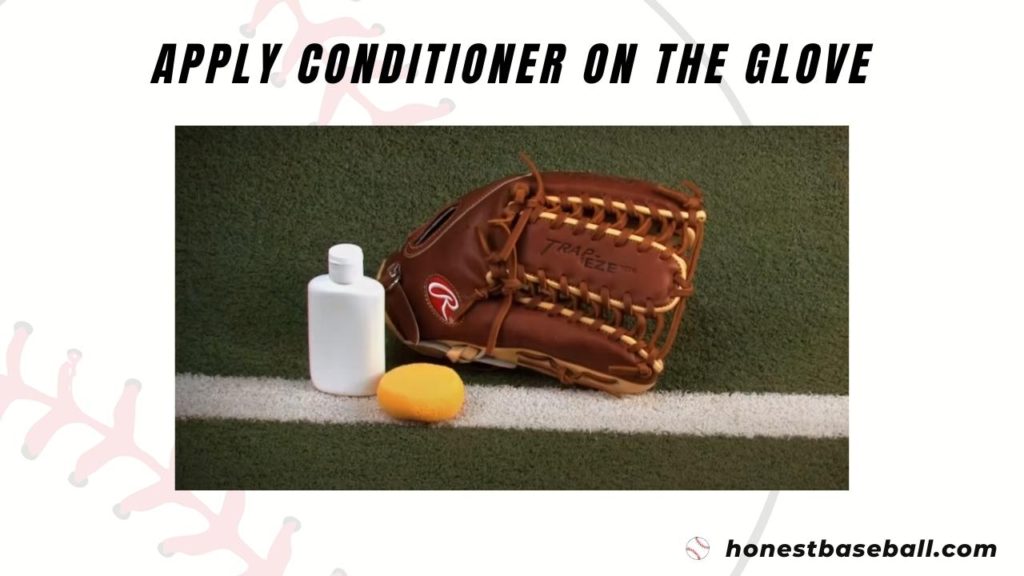
Perhaps conditioning the leather is the most debated way to break baseball gloves. Many players use glove oil for the purpose, whereas some prefer glove conditioners. In my opinion, it’s fair why people criticize leather conditioning.
The process may seem to work, and you get the fastest break-in. But following this method will weigh up your gloves as the leather soaks the applied conditioner. Besides, it can reduce the leather’s durability as it gets softer over the period because of the applied conditioner.
To begin the process, you need a glove conditioner, cream or glove oil, and an applicator sponge.
Step 1: Conditioning The Glove
Get some conditioner on the sponge and apply it to every glove area, including the pocket, palm, backside, thumb, pinky and other fingers, and laces.
Applying it on the laces is necessary because they handle most of the stress when catching the ball. Once you’re finished, use a paper towel to wipe off any excess oil.
Step 2: Shape Your Glove
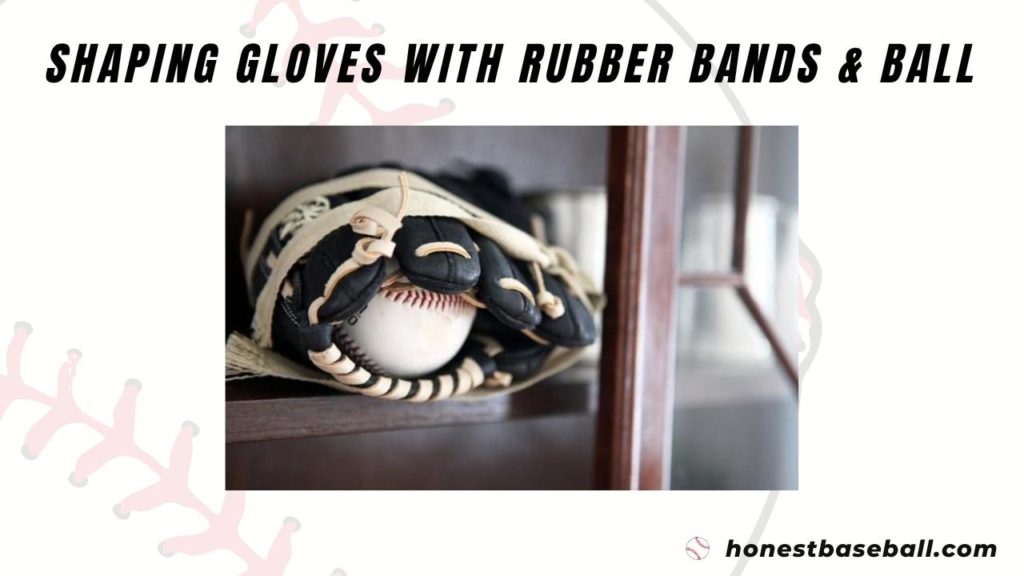
If you only apply the conditioner and leave it to dry out, it’ll soften the leather initially, but the baseball glove won’t get the form you need. Therefore, shaping your glove is inevitable. To start, place a ball inside the mitt.
“Mitt is actually the area in a baseball or softball glove where the pocket meets the palm. More specifically, it’s the zone where the ball is caught most of the time. So, you should ensure it’s formed in the right way.”
Then place 2 bands around the glove like in the following image. It would help if you formed an “X” shape while using the rubber bands.
It’ll ensure to keep the pressure of the bands across the top and the bottom of the glove. The shape will eventually make sure to secure the ball in the pocket better.
After that, keep it inside an oven bag. You must let the glove sit at room temperature for 10-12 hours. I used to keep it there at night. It’ll allow the oil to condition the leather further and let the baseball glove continue to form.
Step 3: Break in the Baseball Glove
Open the bag the following day. Once you’ve removed the ball and bands, you’ll get a pleasing shape for a pocket. You just need to do a little work to break it in.
I suggest using a wooden baseball mallet to help with the break-in process. This tool simulates catching a ball in the pocket. It also allows you to adjust the glove to fit your taste and speed up the break-in time.
The process is relatively straightforward. You need to put on the glove and hit it with the mallet consistently for at least 10 minutes.
While hitting with the mallet, concentrate on hitting the glove’s portions where you’ll catch the ball in the actual match. Move the mallet around to soften up those stiffer areas of the baseball glove.
When you’re done, re-wrap the glove with the shaping ball and bands and keep it sitting out overnight.
Step 4: Practice Catch
After this 2-day break in the process, you now need to inspect how well the operation worked. To do so, simply play catch with your baseball glove.
When practicing catch, concentrate on catching the ball in the pocket. I recommend using the mallet once a day until you’re satisfied with the leather status or form of the glove.
Also, reapplying the baseball glove oil periodically throughout the season will help the glove stay in peak condition. In brief, repeat the process until you get the desired feel.
The “Do Not Do This” List: 3 Break-In Myths That Ruin Gloves
If you search the internet for glove break-in hacks, you will find a lot of terrible advice. Modern baseball gloves are engineered with premium materials, and treating them like an old pair of boots will destroy their lifespan. Here is the Honest Truth about what not to do.
1. The Shaving Cream Myth
Thirty years ago, players used Barbasol shaving cream to break in gloves because it contained Lanolin (a natural oil from sheep’s wool that softens leather).
- The Reality Today: Modern shaving creams are packed with artificial chemicals, fragrances, and, most importantly, alcohol.
- The Damage: Alcohol instantly strips the natural moisture out of the leather. While it might feel soft on day one, your glove will become dry, brittle, and prone to cracking by the end of the season. Stick to dedicated baseball glove conditioners.
2. The Oven or Microwave “Bake”
Some players think heating the glove in an oven at 200°F or putting it in a microwave will instantly loosen the leather fibers.
- The Damage: Your glove contains more than just leather. Inside the thumb and pinky stalls, there are plastic inserts and felt padding that give the glove its structural shape. Baking the glove melts these plastics and completely cooks the leather, turning your $300 investment into a floppy, unusable piece of garbage.
3. The “Drive Over It With a Car” Trick
Yes, people still do this. They put the glove under the tire of their car to flatten it out.
- The Damage: A baseball glove is supposed to have a pocket, not be flat as a pancake. Crushing it with a 4,000-pound vehicle destroys the heel pad, snaps the internal laces, and ruins the hinges you actually need to catch a baseball.
Coach Butler’s “Honest” Rule of Thumb: “If a break-in method sounds like a weird science experiment, don’t do it. Stick to warm water, a wooden mallet, a light coat of conditioner, and playing a lot of catch.”
Frequently Asked Questions
What is a break-in period for baseball or softball gloves?
A break-in period for baseball or softball gloves is the period before use where the glove is stretched and molded to your hand.
How do MLB players break in their gloves?
Most MLB players prefer using heated water or shaving cream to break in their baseball gloves. However, many baseball or softball players don’t like the oil breaking in, as this makes the glove weighty.
How long does it take to break in a baseball glove?
There is no accurate answer to this. The Pro Series baseball gloves take longer to break in than regular soft baseball gloves. Besides, the break-in technique you apply determines the break-in period.
Regarding the baseball glove oil or conditioner break-in method, it may take up to 20 days to get the required fittings and comfort. And if using the warm water break-in method can take 30 days to break in a baseball glove completely.
The timeline also may differ depending on how much time you spend on playing catch with the glove. However, you can use a mallet and pound the baseball glove to minimize the duration.
What is the best way to soften a baseball glove fast?
In my experience, the fastest way to soften a baseball glove is either using oil or conditioner while breaking in. Using shaving cream also seems to take slightly less time to break in than the hot water approach.
Can you use Vaseline to break in a baseball glove?
Technically you can use vaseline to break in baseball gloves. The petroleum jelly in vaseline makes it easier to soften the leather gloves. It also prevents excessive dryness, which you’ll witness in the colder regions.
However, there are some solid reasons why you shouldn’t break in baseball gloves with vaseline.
If the vaseline you’re applying doesn’t have refined petroleum jelly, it may shorten the durability of the gloves.
Besides, vaseline keeps the glove’s leather hydrated, trapping bacteria, dust, and debris. Excessive application of vaseline also increases the weight of the leather, and it won’t be adequate for players, especially at a younger age.
Wrapping Up
Breaking in a new baseball or softball glove is a rite of passage, not a race. As we’ve discussed, taking shortcuts with microwaves, cars, or chemical-filled shaving creams will only destroy your hard-earned investment.
The Honest Truth is that a reliable glove is built through patience. By using the “Aso Method” with warm water, targeted mallet work, and understanding your specific position’s hinge points, you are creating a custom tool tailored exactly to your hand and your game.
Once you have pounded in that perfect pocket and shaped the hinges, the final—and most important—step is simply to get out on the diamond and play catch.
Treat your leather right with a quality conditioner at the end of every season, and it will reward you with years of scooped grounders, diving catches, and game-saving plays. Now, grab your mallet, form that pocket, and let’s play ball!
Check out more about baseball gloves:
How To Measure Hand For Baseball Gloves | Best Tips From A Professional
Best Baseball Gloves Under $100 In 2026
How To Use Vaseline On Baseball Glove? Experts Opinion.
How To Dry A Wet Baseball Glove | Easy 6 Steps
Hello everyone. My name is Jason Butler, and I live in California, America. I was a professional AAA Minor League Baseball player. I lost my chance of playing MLB for injury issues, but I did not lose my love for baseball. I attended the coaching training program and am now working as a coach in a small school in San Diego.
I always love to share my experience and knowledge if that can help you. Play baseball, and stay fit.