Being afraid of fast-coming balls, either from batting or catching is very common for youths. Sometimes, many adults also do so.
But it’s all about the game, and you have to be bold in fielding or batting. However, I would like to tell the parents that there are many precise ways how to stop the fear of catching a baseball.
Hello, I am Jason, and I work as a youth coach. I will let you know how to deal with the fear of youngsters and become a bold baseball fielder at the end of the day.
So, let’s get to the point.
Why Do Youngsters Get Feared of Catching Balls?

If you have ever watched a young player step completely out of the batter’s box when a pitch comes inside, or turn their head away right before a fly ball lands in their glove, you have seen the fear of the baseball firsthand.
It is incredibly frustrating as a coach or a parent, but it is completely normal.
The primary reason is simple: Self-Preservation. A baseball is hard, heavy, and travels fast. When a child sees an object flying directly at their face or chest, their brain’s natural, hardwired defense mechanism kicks in.
Flinching or turning away isn’t a sign of weakness; it is the body trying to protect itself from extreme pain and injury.
In sports psychology, the anticipation of getting hurt is often far worse than the actual impact. This is sometimes triggered by a previous bad experience (like taking a bad hop off the shin in practice) or simply because they do not fully trust their own glove-hand coordination yet.
If a player doesn’t believe their glove will catch the ball, they naturally assume their body will take the hit.
Did you know there are actual medical terms for this? The extreme fear of pain is called Algophobia, and the specific fear of being hit by a ball is known as Athlemophobia. So, if your kid is terrified of the ball, they aren’t just being timid—it’s a scientifically recognized human reaction!
Our goal is to safely override this natural defense mechanism. We do this by building their confidence incrementally, improving their mechanics, and using the right safety gear to prove to their brain that the ball isn’t an enemy.
? Flinch Factor Assessment
Find the exact cure for your player’s fear of the baseball.
1. What is the player’s age group?
How to Stop the Fear of Catching a Baseball?- The Ways
As a coach, I have to impose different strategies at different times. It is because of the diversity of the youths’ psychology. Whether it’s being scared of fast pitches or catching balls, you have to improve some precise mechanics and follow experts’ suggestions.
If you are a new coach, here are some tips for you.
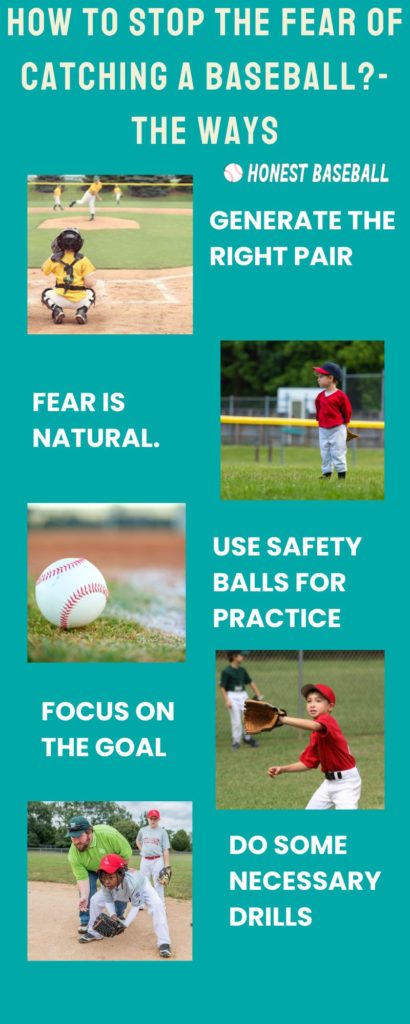
Generate the Right Pair
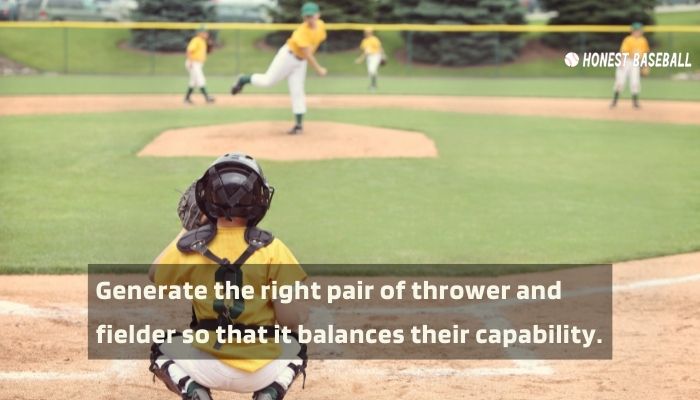
It’s important to understand the aspect of the players. All players are not capable of throwing hard balls. And all they are not capable of catching hard balls as well.
Many youngsters who have just begun to play baseball move their bodies when the ball comes to them. It’s because of hesitation and fear.
In this case, don’t mismatch the throwing and catching partners. If the player struggles with his fear of getting hurt, pair him with the slowest and minimal thrower.
This will make a balance.
Use Safety Balls for Practice
When you use a real baseball or any hardball, and the newbie gets hurt, this will surely decrease his confidence. My humble and most important suggestion is, don’t do that.
Your first job is to grow confidence in the new player. As a coach or parent, use a soft and safe ball that will not hurt the catcher or even get hit by the ball.
This will increase the player’s confidence and gradually decrease the fear of getting hurt. Increase the time and let the player enhance his glove skill. This will make him confident in getting out of the fear entirely.
The 3-Step Fear-Busting Progression Drill
Telling a young player “don’t be scared” rarely works. Flinching is a natural human reflex to protect the face.
To truly stop the fear of catching a baseball, you have to retrain that reflex step-by-step. Here is my foolproof progression to build confidence without the tears:
Step 1: The Barehand Tennis Ball Bounce (No Glove)
Take the baseball glove away completely. Have your player stand 5 feet away from a brick wall. Toss a tennis ball against the wall so it bounces back to them softly. Ask them to catch it with their bare hands.
Why it works: A tennis ball doesn’t hurt. Taking the heavy glove away forces them to use two hands and tracks the ball directly into their palms, building pure hand-eye coordination without the fear of a hard impact.
Step 2: The Soft-Toss with Safety Balls (Add the Glove)
Once they are catching the tennis ball confidently, put the baseball glove back on their hand. Swap the tennis ball for a squishy “safety baseball” (like an Incrediball or a polyurethane practice ball). Stand just 10 feet away and toss the ball with a gentle underhand arc directly into their glove.
- Why it works: They get the realistic feel of a baseball hitting the webbing of their glove, but if they miss and it hits their chest, there is zero pain.
Step 3: The “Hat Trick” Drill (Ultimate Protection)
If your player is specifically terrified of pop-flies hitting them in the face, use the “Hat Trick.” Have them wear their batting helmet—specifically one with a face guard or jaw flap—while practicing catching fly balls.
- Why it works: The psychological safety net of a helmet works wonders. Knowing their face is 100% protected allows them to keep their eyes open and track the ball into the glove instead of turning their head away at the last second.
Never move to the next step until the player is completely comfortable with the current one. If they start stepping in the bucket or turning their head during Step 2, immediately drop the glove and go back to Step 1 with the tennis ball. Patience is your best coaching tool here!
Protective Gear That Builds Confidence
Sometimes, all a young player needs to overcome their fear is a little extra physical armor. Knowing they are protected can instantly change their mindset from timid to aggressive on the field. Here is the gear I highly recommend for players struggling with the fear of the ball:
- Youth Safety Baseballs: Swap out the hard leather for polyurethane practice balls or Incrediballs. They look, feel, and fly like real baseballs but are soft enough that they won’t leave a bruise if a grounder takes a bad hop.
- Batting Helmets with Faceguards: As mentioned in the “Hat Trick” drill, a helmet with a jaw flap or a full cage is a psychological game-changer. It completely eliminates the fear of taking a pop-fly to the teeth during outfield practice.
- Heart Guard Compression Shirts: A lot of kids are terrified of a fast ground ball popping up and hitting them in the chest. A padded compression shirt (heart guard) worn under their practice jersey absorbs the impact and gives both the player and the parents peace of mind.
Don’t let a stiff, heavy glove add to their fear! A kid who can’t squeeze their glove will naturally flinch because they know the ball will pop out and hit them. Make sure they are using a properly broken-in, lightweight glove. Check out my guide on the 10 Best Infield Gloves to find the perfect fit for small hands.
Fear is Natural
Think it’s natural to be feared. In baseball, if you talk to players, you will discover that they all came into this position throw fear in the initial stage.
It comes for every baseball player, even for any other sport too. So, keep the fear aside. Concentrate on your target.
See how the ball comes to you. Let it be in, and try to catch it up with ease. Remember, it comes from a bat which is hit a human. Don’t need to fear a lot. This will gradually vanish with some days.
Recognize your fear. You can easily change your mindset to avoid it.
Focus on the Goal
Keep aside all things except your goal. You have to be better if you survive in baseball. So, there is no chance of being hyped with fear.
Keep in mind one very important truth. In only one day, nothing was successful. Time is required for it. Give yourself some time each day. Or, if you are a coach or a parent, you should encourage the children to develop progressively.
Pay attention to your practice. Practice your footwork, body movement, and hand-eye coordination to improve your overall performance. Gain a basic understanding of the fielding position. You should include both infield and outfield moves in your repertoire.
Over time, the more you practice, the more confidence you can grow. The growth of confidence will lead you to overcome the fear.
Mentally be strong. It’s actually the first thing to hold into yourself.
Additional Read: How To Tell If Your Child Is Athletically Gifted Baseball?
Do Some Necessary Drills
Drills are another important aspect for baseball players. Drills for ground balls or fly balls in groups are an effective way for the players to bring quick results.
For drilling packages, utilize balls that are softer and lighter than you would for solo practice.
Rolling the ball might be an effective approach to start the practice of catching the ball. Because they travel at a far slower speed compared to balls that have been struck, rolled balls pose no threat to beginners.
Under the direction of the coach, the players should be required to complete drills methodically and consistently.
Some Additional Tips on Stopping Fear of Catching a Ball
The following tips might work for your child to stop being fearful of catching balls. You could follow these.
- Let your child start catching sponge balls at a very early age. It might be 2 to 3. He will be accustomed to catching balls. Just roll the ball and let your child catch or touch it.
- With your child’s growth, you can start tossing the ball from a close distance. But, yep, don’t use any hardball.
- Allow him to introduce the tennis ball when he turns 4.
- Teach him how to use gloves at an early age. But don’t do this before 5 or 6.
- Let him be accustomed to his comfort zone. If he is a left-hand thrower, he must catch the ball from his trite side, and vice versa. Toss the balls to his catching side.
Tips on Fielding Ground Balls Without Being Scared
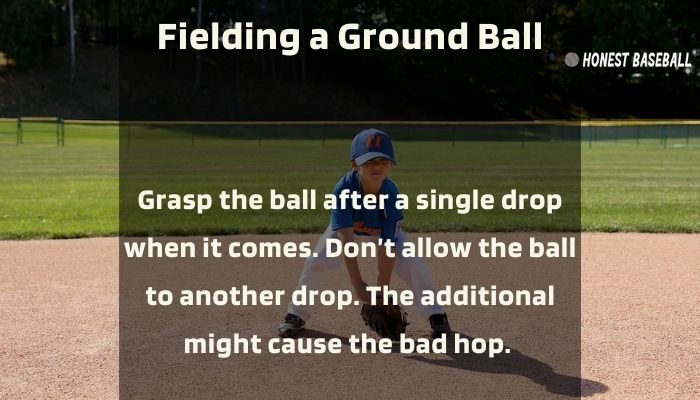
A ground ball is a youth’s most hectic ball to the field. That is why the fear mostly comes in fielding ground ball because any bad hop might happen just in front of the glove and hurt the fielder.
By the way, in this case, you have to improve your fielding mechanics and stance.
- By the way, for fielding a ground ball, the stance is important. Put your back floating on the surface, and keep the gloved hand on the surface. Keep the other hand above the gloved hand like an alligator mouth.
Grasp the ball after a single drop when it comes. Don’t allow the ball to another drop. The additional might cause the bad hop.
During catching the ball, you can catch the ball, keeping it by your gloved hand side. That means you are a left-hand catcher, keep the ball on your left side, and opposingly, keep the ball on your right side if you are a right-hand catcher.
Tips on Fielding A Fly ball Without Being Scared
Like a ground ball, catching a flying ball also has some uncertainties. The measure must be efficient to catch a fly ball. Otherwise, this could hit on your face or any other body parts.
By the way, you can practice with a softball, tossing it up and catching it consistently. This will help to become accustomed to the ball’s landing space.
Another aspect of catching a fly ball is to go under it when the ball is in the air. Catching with a softball would increase confidence. So, the fielder must master getting under the flying ball to catch it.
Catching a fly ball needs a lot of mechanics to learn. Also, there are many tips and tricks to hold. Our detailed guide on “How to Catch a Fly Ball?” will help you to master it precisely.
Related Questions
1. How do I stop being scared of getting hit in baseball?
Stopping being scared of getting hit by a baseball could be prevented if a young kid starts practicing with soft balls. The ball could be a tennis ball or a ball with Polyurethane material.
2. What is the fear of getting hit by a ball called?
The dread of being struck by a ball is known by its phobia term, athlemophobia. On the other side, the dread of experiencing excruciating pain is referred to as algophobia.
Is Your Player Scared? Try the Flinch Factor Assessment
Every young player has different triggers for their fear. Don’t use a one-size-fits-all approach. Use Coach Jason’s quick assessment tool below to find the exact drill and gear your player needs to conquer their fear of the baseball!
? Flinch Factor Assessment
1. What is the player’s age group?
Wrap Up
As we said, getting scared of hitting a ball is natural for youths. But over time, this should be cured. And it also goes through a natural process.
The answer to the question of how to stop the fear of catching a baseball is to practice a lot more. Also, make sure the practice get improvement with proper manner and regulations.
Aside from these, mental stability and strength are other powerful components to overcome fear.
You Also May Like:
Baseball Drills for 7 year olds | Coach Preferred
How To Increase Pitching Velocity By 10 MPH | 25 Proven Tips
How To Stop Arm Barring Baseball | Everything You Need To Know
How To Practice Pitching Alone For Baseball?
Hello everyone. My name is Jason Butler, and I live in California, America. I was a professional AAA Minor League Baseball player. I lost my chance of playing MLB for injury issues, but I did not lose my love for baseball. I attended the coaching training program and am now working as a coach in a small school in San Diego.
I always love to share my experience and knowledge if that can help you. Play baseball, and stay fit.