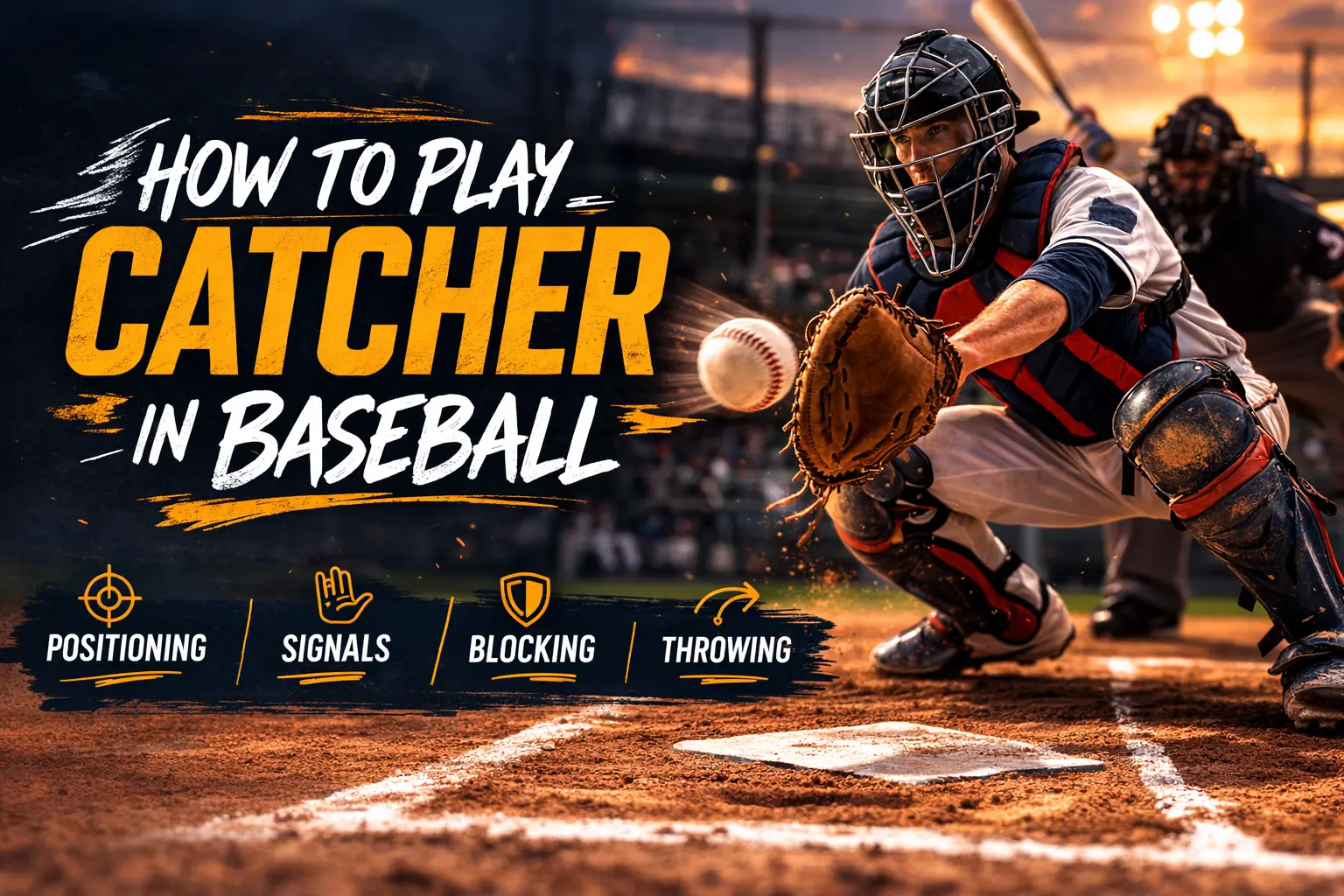
Do you want to be a baseball catcher? If so then you need to work really very hard from the very beginning of your baseball career. At first, you need to learn how to play catcher in baseball and all the other responsibilities you need to play.
One of my known ones started training and within a week he felt being a catcher in baseball is not his cup of tea. He didn’t have enough patience and stopped his training. When I got to know his situation I welcomed him to do practice with me. I trained him for a month and then he regained his confidence and now he runs his own baseball training academy.
So from my experience, I can say, gradually by practising daily, you will get to learn how to be a better baseball catcher. Let’s take a look at several technical and motivational catching tactics in baseball.
What Qualities Do You Need For A Baseball Catcher?
You may first observe the physical attributes when considering the abilities and traits that make a baseball catcher successful.
Before chasing for qualities you must gain some knowledge about catcher position baseball, how to be a better catcher, how to play catcher in little league baseball etc.
A catcher’s role is kind of all-rounder. You have to be an all-rounder in many factors. Batting, baserunning, pitch framing, catching baserunners, and pitch blocking are all the skills that you must master.
Each of the mentioned points is vital for you in catching skills, but some are more important than others. However, there are some qualities that are important for catchers in baseball. Those are given below:
Supervision
As a catcher in baseball, you must be able to observe all the circumstances. The catcher position in baseball is very important. Everyone should value the catcher position baseball. No one can achieve the catcher position baseball easily. You have to work very hard for the catcher position baseball.
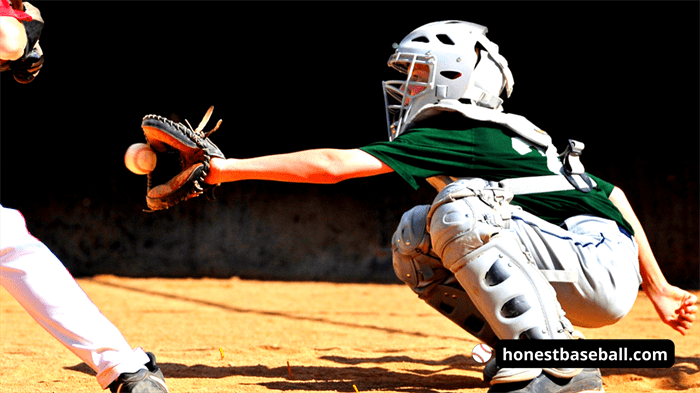
Firstly, being a catcher in baseball you will have the opportunity to give instructions to your team during the match. Sometimes the coaches of baseball even do not have this opportunity.
Catchers as one of the finest leaders possible, have to set a good example and always give their all on the field. When your other teammates will see you as a catch doing everything, others will be highly inspired to show the same effort from their own position.
Communication
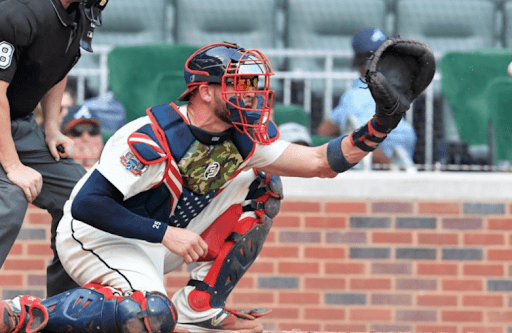
Communicating with the other players on the baseball field is one of the catcher’s key responsibilities. If you want to be a good catcher, you have to have communication skills.
You must have the ability to communicate both verbally and nonverbally with your fellow teammates. For example, as a catcher, you must continually interact with your fellow pitchers so that you can anticipate the type of pitch the pitcher would throw next.
Understanding Work Ethic
Catchers engage in almost every play when their team is on defence. As a result, hustling is critical for assuring the team’s success as well as pushing teammates to always give their utmost on the field.
Quick decision making
Being a catcher, you should be quick enough to respond to every act. Another scenario in which catchers must act quickly is when a runner attempts to steal a base. You have to judge the situation quickly and execute a quick but precise throw to get the base runner out.

The Modern Catcher’s Stance: The “One-Knee Down” Revolution
If you look at an MLB game in 2026, you’ll notice something very different from the 1990s: almost every catcher is resting one knee on the dirt. When I was coming up through the AAA Minor Leagues, we were told that “One-Knee Down” (1KD) was lazy. Today, we know that’s completely wrong.
In modern baseball, catching isn’t just about survival; it’s about optimization. To play at an elite level, you need to master three specific stances.
1. The One-Knee Down (1KD) Stance: The New Standard
This is the “Bread and Butter” of the modern catcher. By dropping one knee to the ground (usually the left knee for right-handed catchers), you achieve two massive advantages:
- Framing Mastery: You are lower to the ground, which allows you to “work under” the low pitch. This makes borderline balls at the bottom of the zone look like strikes to the umpire.
- Leg Longevity: Catching is brutal on the knees. 1KD takes the weight off your joints, keeping your legs fresh for your at-bats in the 9th inning.
2. The Traditional Squat (The “Wall”): Runners on Third
While 1KD is great for framing, it’s not the best for mobility. When there is a runner on third base and a wild pitch could cost you a run, I recommend switching back to the Traditional Squat.
- The Goal: Total lateral movement. Your feet are wider than your shoulders, and your weight is on the balls of your feet.
- The Action: From here, you can “kick out” your legs and drop into a block faster than from a 1KD position. It’s about being a “Wall” first and a receiver second.
3. The Secondary Stance: The “Ready-to-Launch”
You use this stance when there is a fast runner on first or second and a steal is likely.
- The Setup: Your “butt” is higher in the air than in a traditional squat. You are leaning slightly forward.
- The Advantage: You’ve already done 20% of the work required to stand up. This shaves precious tenths of a second off your Pop Time, allowing you to “launch” the ball toward second base the moment it hits your glove.
Coach Butler’s “Honest” Tip: When to Switch?
I always tell my students: “Let the situation dictate the stance.” * Nobody on base? 1KD all day. * Runner on 1st with a slow pitcher? 1KD or Traditional. * Fast runner on 2nd in a tie game? Secondary Stance.
Mastering the transition between these three positions is what separates a “guy behind the plate” from a True Catcher.
Mastering the Pop Time: How to Throw Out More Base Stealers
In the world of professional scouting, the most important number for a catcher isn’t their batting average—it’s their Pop Time.
Pop time is the total time it takes from the moment the pitch hits your glove to the moment your throw reaches the middle infielder’s glove at second base. In the Big Leagues, the gold standard is 2.0 seconds or faster. To get there, you don’t necessarily need a “cannon” for an arm; you need elite physics and efficient footwork.
Here is how I teach my catchers to shave tenths of a second off their clock and become a base-stealer’s worst nightmare.
1. The “Chest-High” Transfer
The biggest mistake young catchers make is “reaching” for the ball or trying to grab it too far in front of their face.
- The Secret: Let the ball come to you. As the ball enters your glove, bring your glove and your throwing hand together at the center of your chest (the “power “T”).
- Why it works: By meeting in the middle, you’ve already completed 50% of your arm path before you even start the throw. It keeps the transfer “clean” and reduces the chance of a bobble.
2. The “Replace Your Feet” Method
If you take a big, lunging step toward second base, you’re losing time. Instead, we use the “Replace” footwork.
- The Move: Imagine there is a coin under your front (left) foot. Your goal is to move your back (right) foot directly to that coin.
- The Action: As you catch the ball, jump-shift so your right foot lands exactly where your left foot just was. Your body should now be perfectly sideways (perpendicular) to second base.
- The Advantage: This “replaces” your momentum. It builds immediate power from your legs into your core, so your arm doesn’t have to do all the heavy lifting.
[Image showing catcher footwork diagram: back foot replacing front foot for a throw to second base]
3. Short-Box Arm Action
Long, loopy “outfield” throws will get you beat every time.
- The “Ear” Rule: When you pull the ball from your glove, the ball should stay close to your right ear.
- The Release: Think of it like a “catcher’s dart.” Short, explosive, and over-the-top. A high release point creates “backspin,” which keeps the ball traveling in a straight line rather than “tailing” away from the second baseman.
Catcher Footwork Drills: The “Rapid-Fire” Routine
To lower your pop time, you have to turn these mechanics into muscle memory. Here are two drills I swear by:
- The “T-Line” Drill: Draw a “T” in the dirt. Stand at the bottom of the T. Practice your “Replace Feet” move so that your feet land perfectly on the crossbar of the T every time. Focus on speed, not power.
- The “Chair” Transfer: Sit on the edge of a chair or a bucket (to isolate your upper body). Have a partner toss balls to you. Practice the “Chest-High” transfer without using your legs. This builds “lightning hands.”
The “Honest” Insight: > I’ve seen catchers with average arm strength reach the 1.9-second mark just by perfecting their footwork. It’s not about how hard you throw; it’s about how fast you get the ball out of your glove.
How Do You Teach a Catcher to Catch?
It is not easy to explain the catching process in writing. It is more like a practising process. Nevertheless, I am trying to explain every points step by step below:
The Catcher’s Step-Ladder: A 3-Level Drill Progression
Most young catchers try to do everything at once, which leads to “information overload.”
In my coaching sessions, I use a Step-Ladder system. We don’t move to Level 2 until you’ve mastered the fundamentals of Level 1.
Replace your old practice list with these high-intensity, modern drills designed to build elite muscle memory.
Level 1: The “Wall-Ball” Receiving Drill (Developing Soft Hands)
Before you put on a heavy glove, you need to train your brain to “beat the ball to the spot.”
- The Setup: Stand 5–8 feet from a brick or concrete wall. No glove—just your bare hands (or a soft training mitt).
- The Drill: Throw a tennis ball or a rubber “reaction ball” against the wall. As it returns, focus on moving your hand so it is already waiting at the impact point.
- The Goal: Focus on thumb-under receiving. For low balls, keep your thumb parallel to the ground to “lift” the ball into the zone. This is the foundation of elite pitch framing.
Level 2: The “Blind Blocking” Drill (Reaction & Instinct)
Blocking isn’t just about technique; it’s about removing the “flinch.”
- The Setup: Get into your One-Knee Down (1KD) stance. Close your eyes.
- The Drill: Your coach or a partner stands 10 feet away with a bucket of balls. They will yell “GO!” and roll or bounce a ball toward you. The moment you hear the command, open your eyes, find the ball, and drop into a blocking position.
- The Goal: You want to eliminate the “thinking” phase. By starting with eyes closed, you force your body to react to the ball’s trajectory instantly, tucking your chin and “centering” the ball between your knees.
Level 3: The “T-Drill” for Footwork (Explosive Pop Time)
Now that you can catch and block, you need to be able to launch.
- The Setup: Draw a large “T” in the dirt. Stand at the base of the T in your secondary (high-butt) stance. Place a ball at the top of the T (2nd base), one to the left (3rd base), and one to the right (1st base).
- The Drill: Have a partner call out a base. Use the “Replace Your Feet” method to move toward that ball. Your back foot must land where your front foot started.
- The Goal: Efficiency. If you’re throwing to second, your hips should be perfectly aligned with the top of the “T” the moment you’ve “replaced” your feet.
The above mentioned are some normal catching processes. There are so many different techniques. It is not easy to gather knowledge on how to play catcher in baseball in a very short time.
You have to have patience and practice regularly. I saw some players give up very easily at a very early period of practising. It should not be done.
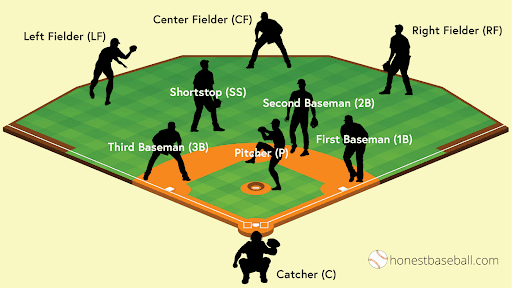
Is catching a baseball ball difficult?
Catcher is a position in baseball that is extremely tough to master. Your main focus should be on how to be a better baseball catcher. Moreover, you have to research more and more on how to play catcher in baseball.
You definitely heard the phrase “Practise makes a man perfect,” to be a catcher, you must practice more and more.
Catching may be a taxing position on the body, both because of the posture baseball catchers must adopt on each pitch and because of the frequent contact, the body makes with a hard object travelling at fast speeds.
Catching high foul balls is challenging especially for catchers for several reasons. You have to notice the ball, its height, spin, wind influence, and tracking. At first, you may feel it is very difficult to catch but gradually you will get to know how to be a better catcher.
At first, catching is difficult, you have to dig deep and practise hard on how to be a better baseball catcher.
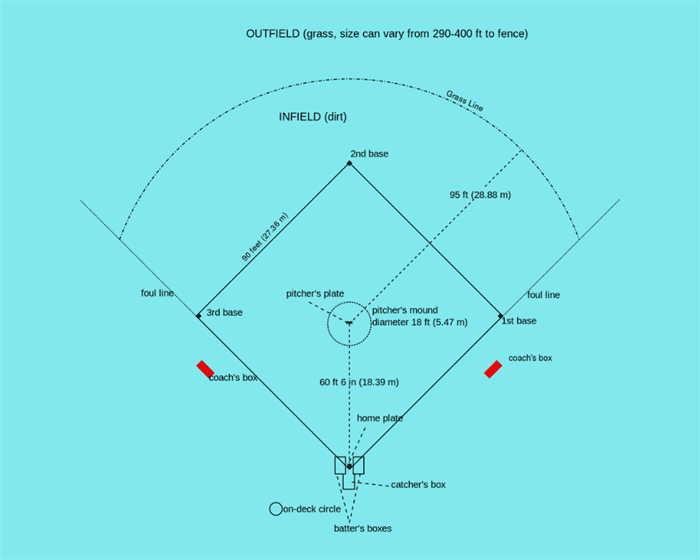
What Exactly Does a Catcher’s Job Entail?
There are 3 things every catcher should know.
Understand your pitchers
As a catcher, you should know your pitcher better than them. You should know what pitchers like to throw and what he does not. The relationship will build over time.
Blocking and stopping the ball
There are three pillars of power of catching, such as receiving, blocking and throwing. For blocking you have to be anticipated and set up your mind. If the pitch is bouncy you have to be always ready to block it. You should keep the ball in front and catch it bravely.
Connection
Communication is the main thing you need to do being a catcher in baseball. If you are a catcher then you are the only one on the baseball field to start a play in foul territory and examine the entire field.
You are the point person. As a catcher you see everything being the leader. And you are the one who handles baseball the more.
The value of repetition and experience cannot be ignored in how to be a better baseball catcher. The best approach to developing a good catcher’s talents is to give them time and the player’s approach is to give enough dedication.
If you want to know more about best baseball practices and how to play catcher in baseball you can visit the following link- Best Baseball Practice Plan.
Is It Difficult To Play Catcher In Youth Baseball?
If you are a youth you may want to know how to play catcher in youth baseball. See the link below:
To be honest, playing catcher in youth baseball is no different than the older. How to play catcher in youth baseball?
At first, you have to be very patient to learn how to play catcher in youth baseball. You need to practice more and more.
So I hope now you can understand how to play catcher in baseball or how to play catcher in youth baseball are not difficult. You need to practice more and more.
From the above-mentioned techniques and through practising you will get info about how to play catcher in little league baseball. Little League is a baseball league for kids ages eight to twelve.
We have an article on running and catchers’ relation with it which may assist you to understand more about catchers in baseball.
Why is it so Difficult to be a Catcher?
Below I am explaining why I believe it is a difficult job to be a catcher in baseball:
- Firstly, you will be squatting the whole time. Thus your thighs will be under pressure or get stuck.
- You have to sprint to the backstop in the hopes of catching what is sent over your head.
- Different leagues always pick the ones who are the quickest and have the stamina for the position.
Nevertheless, the level of catcher in baseball required could also be determined by the pitcher. You have to understand that no work is less important. Without hard work, you won’t be able to achieve anything.
You have to work hard to know how to play catcher in baseball. As there are many responsibilities, so it won’t be as easy as other posts of any game.
From the above information, I hope you get enough understanding of the responsibility of a catcher in baseball. It is a big responsibility and enjoyable position in baseball.
Is it possible for everyone to be a catcher?
Catching is an exceptionally difficult position to play in baseball.
If you’re a catcher on defence, you have a lot of responsibilities to play. The primary duty is to catch all pitches thrown by opposing pitchers.
It can inspire you that a catcher in baseball is not born. Catchers are made by training and practising. Within a day or hour, you won’t be a catcher in baseball. You need to love your post and the responsibility of a catcher in baseball.
What are the best catching positions in baseball?
There are numerous ways of catching in baseball. My favourite catching positions are highlighted below:
The squat is the main position to catch the baseball. You should try to catch something strong and soft. You may be surprised at how two different things can be done together.
Your hand has to be strong while you will catch it softly. You are not attacking the ball, you are receiving. You should receive it softly.
See the link below for more details:
If you are young enough then your hands are also small. You should focus on your angle in this case.
What Will Happen If You Drop The Baseball?
Here the rules are weird. An uncaught third strike occurs when you drop the catch. It’s also known as a dropped third strike or an uncaught third strike.
The batter will turn into a runner if you drop the baseball. If you are unable to catch the ball on a third strike and the first base is open then there will be two outs.
Frequently Asked Questions
In baseball, what is the most difficult position to play?
There are many arguments on it. Some say a pitcher is the most difficult one, on the other hand, some say the post of Catcher. It can’t be decided which one is the most difficult one as both play a vital role in baseball.
In baseball, what is a catcher’s job?
Basically, a catcher is known as the leader of defence while staying on the field.
What is a decent catcher’s height?
Catchers stand around 6 feet tall and weigh roughly 214 pounds on average.
In Little League, what kind of baseball is used?
Little League (Majors), Junior players use 12-inch softball.
Conclusion
Baseball is a popular sport among both beginners and pros. It’s critical to remember all the rules for a catcher. However, practising will make a professional baseball catcher.
“How to play catcher in baseball” is a very crucial question which needs months or years to become fully successful. Without a good catcher, it is impossible to get a winning baseball team.
Please do not hesitate to contact us if you have any questions. I hope the information above on how to play catcher in baseball has given you a solid idea of how to do it correctly.
Hello everyone. My name is Jason Butler, and I live in California, America. I was a professional AAA Minor League Baseball player. I lost my chance of playing MLB for injury issues, but I did not lose my love for baseball. I attended the coaching training program and am now working as a coach in a small school in San Diego.
I always love to share my experience and knowledge if that can help you. Play baseball, and stay fit.