
Let’s be honest: your brain is supposed to be scared of a 70-MPH rock flying toward your ribs. That’s your survival instinct working perfectly. But in the batter’s box, that instinct is your worst enemy.
In 2026, we don’t ‘man up’ or ‘tough it out.’ We use Progressive Desensitization to trick the brain into staying calm when the heat is on. Here is the ‘Honest Baseball’ blueprint for turning fear into focus.
So, the only solution is to know “How do I stop being scared of fast pitches” to survive and build up my career. Normally, young baseball players are scared of fastballs.
But everyone does it, and they overcome and become the professionals who play in MLB.
Yep, you have to get rid of this and will prepare yourself for getting into the peak of your baseball career. And yes, it will help you to become a better baseball hitter.
No worries, I will help you by suggesting the ways. Your duty is to execute the ways with the help of your coach or parent to get rid of being scared of fast pitchers.
Survival Instinct vs. The Hitter’s Mindset: Understanding the “Amygdala Hijack”
Most coaches will tell you to “just be brave” or “stand in there.” But here’s the problem: your brain is faster than your courage.
When a 70-MPH fastball is bearing down on you, your brain doesn’t see a baseball; it sees a threat to your physical safety. This triggers what neuroscientists call the Amygdala Hijack.
The Science of the “Flinch”
The Amygdala is the “alarm system” of your brain. It’s located in the primitive part of your mind (the lizard brain). Its only job is to keep you alive.
When it detects a high-speed object coming toward you, it sends an instant signal to your muscles to flinch, jump, or turn away.
This happens in milliseconds—long before your “logical brain” can say, “Hey, I’m wearing a helmet, I’m fine.” You aren’t “scared” because you’re weak; you’re flinching because your brain is functioning perfectly.
The “Honest” Insight: The Higher Priority Task
I don’t teach my hitters to “kill” their fear. You can’t kill an instinct that has kept humans alive for thousands of years. Instead, I give the brain a Higher Priority Task.
Think of your brain like a computer. If it’s busy running a complex program (like hunting for the red seams on a spinning ball), it doesn’t have enough “processing power” to trigger the fear alarm at the same time.
How to Hack Your Brain in the Box
To move from a Survival Instinct to a Hitter’s Mindset, you have to stop thinking about not getting hit and start thinking about collecting data.
- The Seam Hunt: Instead of looking at the pitcher’s face, focus entirely on the “window” where the ball is released. Try to see the individual red seams.
- The Spin Read: Ask yourself, “Is it a four-seam or a two-seam?” * The Result: By forcing your logical brain (the Prefrontal Cortex) to work on these high-detail tasks, you effectively “mute” the Amygdala. The fear doesn’t go away—it just gets pushed to the background because you’re too busy being a scientist.
The “Fear-to-Focus” Step-Ladder: Your 3-Level Training System
Overcoming the fear of the ball isn’t about a single “aha!” moment; it’s about building a series of small wins. I call this the Step-Ladder. We start with zero risk and gradually build up to game-speed velocity.
Level 1: The Tennis Ball Blitz (The “No-Sting” Zone)
The Goal: Prove to your “Lizard Brain” that getting hit is a non-event.
The Drill: Put on your helmet and stand in your normal stance in the box. Have a coach or partner stand about 15–20 feet away and throw tennis balls or soft foam balls directly at your body.
The Action: Do not move. Your only job is to let the ball hit you. Focus on your breathing.
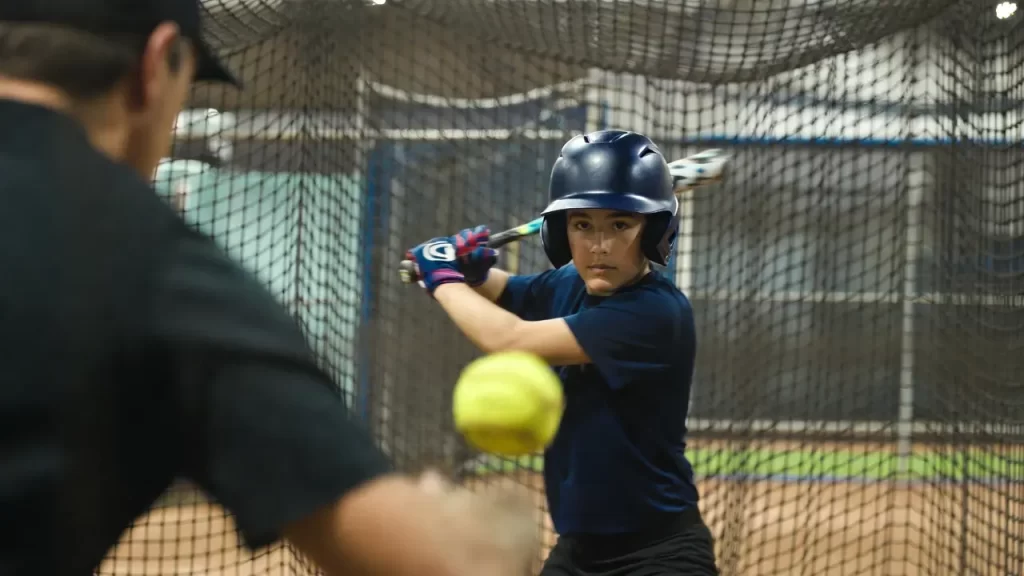
The “Honest” Why: Your brain has associated “ball hitting me” with “catastrophic pain.” By getting hit 10–20 times with something that doesn’t hurt, you are manually resetting your brain’s alarm system. You’re teaching your nervous system that you can stay calm even when an object is on a collision course with your ribs.
Level 2: The “Turn and Tuck” (Mastering Protective Mechanics)
The Goal: Replace the “Panic Jump” with a “Safety Pivot.”
The Drill: This is a dry-run mechanic. Practice without a ball first, then move to soft-toss. When the coach shouts “HIT!”, you perform the Turn and Tuck.
The Action: 1. Pivot: Turn your front shoulder toward the pitcher. 2. Tuck: Tuck your chin to your chest to protect your face and throat. 3. Hinge: Slightly bend forward to take the ball on the meaty parts of your back, shoulder, or backside.

The “Honest” Why: Fear often comes from a feeling of helplessness. By mastering the Turn and Tuck, you are giving your body a “Plan B.” If a pitch comes inside, you no longer panic; you execute a trained physical move that minimizes the risk of injury.
Level 3: The Angle-Tracking Drill (Visual Desensitization)
The Goal: Train your eyes to process “scary” velocity as simple “data.”
The Drill: Set a pitching machine to a speed 5–10 MPH faster than what you normally face in a game. Stand in the box without a bat.
The Action: Watch the ball from the moment it leaves the machine until it hits the catcher’s mitt. Do not swing. Do not move. Try to shout out the color of the seams or the “spin” you see.
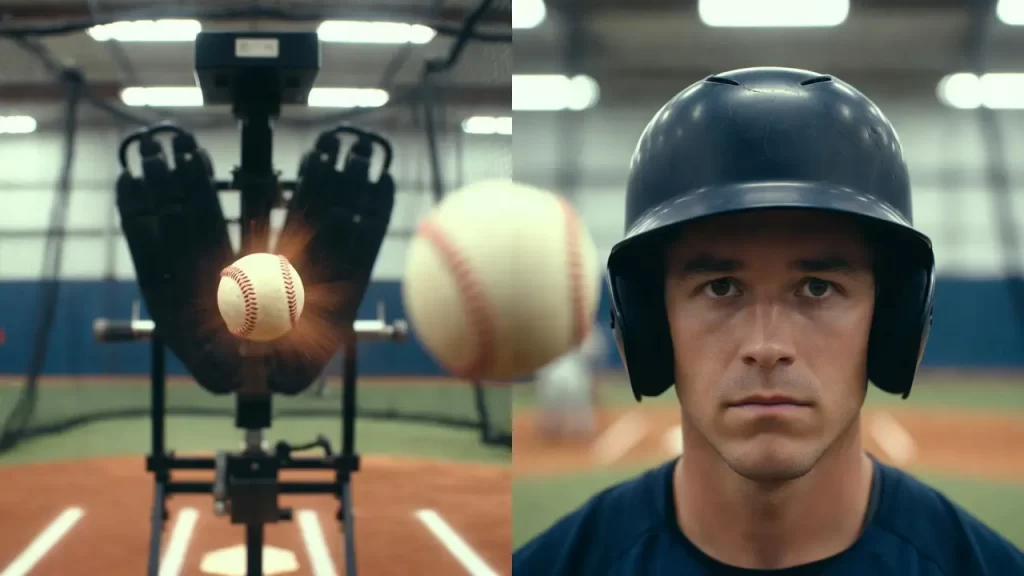
The “Honest” Why: This drill is all about the optic nerve. High velocity causes the eyes to “shock-freeze.” By watching faster-than-normal pitches in a controlled environment where you know you aren’t going to swing, you desensitize your visual system. Suddenly, your league’s average 60-MPH fastball will look like it’s moving in slow motion.
The Parent’s Coaching Script: Speak Confidence Into the Box
Let’s be honest: watching your kid flinch or bail out is frustrating. But as a parent, your words can either act as a “Safety Shield” or a “Panic Trigger.”
The goal isn’t to tell them the ball won’t hit them (that’s a lie—it might). The goal is to praise the process and the mechanics they are using to stay safe.
The “Honest” Rule: Never Promise Safety
❌ What NOT to say: “Just stand in there, it won’t hit you!”
The Problem: This is a trust-killer. If you say it won’t hit them, and then it does, you’ve just proven that the box is dangerous AND that you don’t know what you’re talking about. The brain will double down on the fear.
The Script: What to Say Instead
Instead of focusing on the ball, focus on their eyes and their body control.
When they track the ball well:
I saw your eyes lock onto that ball all the way to the glove. That is elite focus. You’re seeing the heat perfectly.”
When they execute the Step-Ladder Level 2
Your ‘Turn and Tuck’ looked professional on that inside pitch. You’re armored up and you have a plan. Great job protecting yourself.
When they stay in during a fast pitch (even if they don’t swing)
I love how quiet your feet were on that high-fastball. You’re teaching your brain that you own that space.
When they actually get hit
Perfect ‘Turn and Tuck.’ You took that like a pro on the shoulder. You’re okay, and you just earned a free base. Way to be tough for the team
Coach Butler’s “Honest” Tip for Parents
If your player is struggling, don’t ask, “Why are you scared?” That forces them to focus on the fear. Instead, ask a technical question: “What color were the seams on that last one?” or “Did you feel your chin tuck on that inside pitch?” By asking technical questions, you pull their brain out of the Amygdala (Panic) and back into the Prefrontal Cortex (Logic). You aren’t just a parent anymore; you’re a mental performance coach.
What Are the Reasons Behind Getting Scared of Fast Pitchers?

Youth baseball players may be scared for various reasons.
The primary reason that happens mostly is to fear of getting hit by the balls on the body. A young player, most of the time, thinks that the pitched ball may hit him and he will be hurt
On the other hand, miss-hitting could be another reason. As a result, the player may be in the situation thinking that he will be struck out of the pitches.
However, do the ball hits hurt the hitters? Yes, it does. But the intensity of the pain depends on the physical and mental strength of the hitter. Also, the ball speed is another element that determines the pain level.
The fear of being hit affects the level of pain too. And, of course, the impact is affecting the young players.
But, in the end, scaring the fast-pitched ball is part of the game. Your duty is to ensure that your kids are overcoming it.
For this, there are several things to do. I will discuss your question, “how do I stop being scared of fast pitchers” to overcome fear.
Additional Read: How To Break In A Baseball Glove In 5 Minutes?
How Do I Stop Being Scared of Fast Pitchers?- Tips to Follow (Detailed Guide )
Many effective ways will help your kids to stop getting scared of fastballs.
Mental strength, regular batting practice, batter’s box comfortability, practice with soft toss and balls, focusing, and practice drills, these several steps could be the best practice to eliminate your kid’s fear.
Teach kids how to move with them.
Being Mentally Solid
As a baseball coach and counselor, I have worked with young baseball players for long days. Whatever the ball speed is, the main enemy of the new youngster to fear the ball is their mental state.
Basically, they think the pitched balls hurt worse. And it is natural to think for them. But, you must teach kids that it is one of the natural parts of the game.
Motivate your kids to become mentally strong. Tell them not to fear the balls; either the ball comes from young pitchers or from other players.
Hold the bat confidently. Keep the game fun. Keep your mental stance to the utmost confidence level. Treat the coming ball like professional players. Think of dominating the ball, and let it come so that you can handle it.
Trust me, being mentally strong and solid will remove 80% of your fear of being hit by the ball.
Think of yourself as a great hitter from the beginning. And you know, a great hitter hits great.
Batter’s Box Comfortability
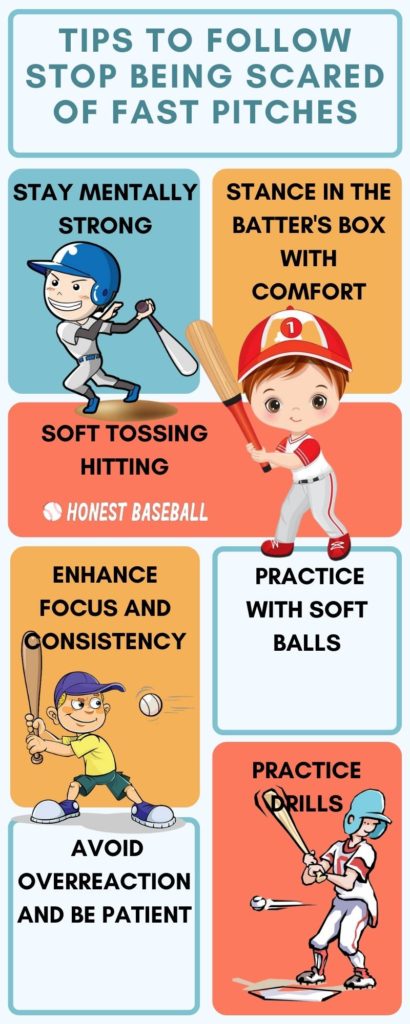
The place where a hitter thinks to be hit is the batter’s box. As a result, the new youngsters might move backward with their back legs, which undoubtedly directly affects their stance.
As a result, it is certain the hitter can’t hit the ball effectively; rather, it’s impossible. It clearly shows that the hitter is scared and thinking of getting hit by the ball.
So it is your duty as a coach to ensure the comfortable stance of the hitter inside the batter’s box.
Make them understand that the ball will not injure them if they do not flash their sensitive body parts like their face and other vulnerable body parts.
This could be scary for the youngsters to directly face the pitchers. But remember, you should make this stance your comfort stance to directly back towards the pitcher.
It will not injure you if you don’t bail out your sensitive body parts.
Let them practice staying in the box by letting them not go backward.
So, teach kids to stand in the batter’s box with confidence. Giving Kids instructions and training aids in reducing the fear effectively of being hit.
See Also: How To Tell If Your Child Is Athletically Gifted Baseball?
Soft Tossing
Allow your young players to start hitting or fielding the ball softly. Never be hurried to focus on the fastballs from the beginning. Batting practice with soft toss will help to ease the hitters to habituated to the pitched ball.
As a result, the batter will get a wider stance and remain in its place.
Focus and Consistency
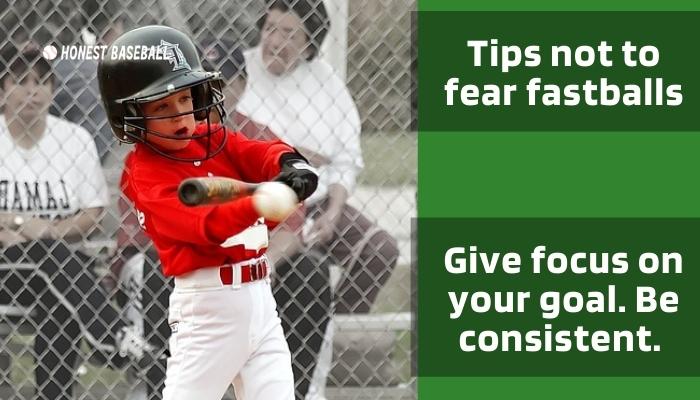
Focus is one of the core elements of success. When youth baseball players start to focus on their target and learn what to do, they will be improving their fearing senses not to fear.
Focus on the pitcher’s throwing hand, the line of action. Analyze how he throws the ball inside. You can tackle the ball softly whether it the pitchers throw hard or whatever.
Overcoming the fear of being hit will not happen within a single day. You have to achieve the goal gradually.
Take care of the youngsters’ footwork. Teach them how to improve their footwork and bring much control over their back and front leg.
On the other hand, the fielders must strive to learn and do something. The players must be comfortable in fielding the line drives and high fly balls.
Practice with Soft Balls
One of the most important things for the kids is to start practicing with soft balls. Remember, if you start with a hard leather
Another suggestion is to start batting practice with tennis balls or soft baseball. This will give the youngsters more confidence.
The same suggestion fit for the fielding too. Like batting practice, where a batter fears to hit by a leather ball, a fielder also might be scared to field a fast ground ball harder.
So, the main goal of the coaches is to improve gradually. Let the youngsters field with soft balls as well. When the youth players get hit by the softballs and don’t get hurt, their confidence grows.
Avoid Overreaction and Be Patient
Okay, one of the most important mental stances to overcome the fear of getting hit is to become patient. So, let your kids become patient by telling them that nothing big happens in a single day.
Also, make sure, as parents, or coaches, you don’t overreact immediately after your kids get hit. It will surely impact them mentally and let them get more fear.
Rather, motivate them with positive words. This will help them mentally overcome the fear gradually.
Drills for Getting Out of Fear Fastballs
Baseball drilling is one of the greatest and most impactful methods to improve hitting and fielding. And, of course, a great way to overcome fear.
The drills need to be practiced in groups. Adults and coaches should properly help the young players to let them develop their mechanics and tactics to face the ball s not to fear.
The youth players could practice several drills.
Bean Balls Drill: The players who bat directly will certainly get hit by the ball on a stage. And it’s unavoidable. But, it is also true that the fear of getting hit could make things worse.
As a result, we can use hit the youths willingly. Hey, stop! Don’t pitch a real ball inside in this case. Use fluffy balls toward the hitters and let them manage the balls by not getting hit. However, if they miss and get hit, no worries, it will not hurt them.
Another way to overcome the fear of getting hit is by getting hit on the safest areas of the body parts. Teach the youngster that getting hit is a natural part of the game. So, they should try to get hit on the safest and the least painful area of their body when it is literally unavoidable to get hit by the ball.
Getting Out of the Ball’s Way: Our target is to keep the kids in their place and not go backward. But skipping the balls will not fall into this category.
When a player sees the ball will hit him, drilling to get out of the ball will help him overcome the fear. Okay, it is not doing get backward, rather turn around the hitter’s arm back.
Let them allow skipping the ball and let it go through its way. Though this will strike out the batter in a real-life game, our goal is to help the hitter overcome his fear first.
Let the young players to habituated to passing the ball to avoid the hit to reduce their fear of being hit. It will help them grow their confidence that they can protect themselves from getting hit.
Drills for Overcoming Fear for Fielding Ground Balls
A ground ball is one of the hardest balls to field. It comes fast and challenges the player who wants to catch it.
So, youngsters fear getting hit by the ground ball on their faces or heads by dropping the ball in front of them.
It happens due to poor mechanics and tactics, and newbies get hurt. There are some techniques to overcome this situation. The two most effective drills are as follows.
- The first one is the goalie drill. The distance between the coach and the player will be between 15 to 20 feet. After that, he would lob a tennis ball or any other kind of soft ball on the player’s right and left the ground and watch it bounce.
The guy is going to go at the ball and tackle it with his chest rather than trying to grab it. It helps one conquer fear and boosts confidence at the same time. - The second one is a stationary-ready position drill. The player will be in fielding position, and the coach will consistently throw the ground ball. The player will catch each ball, and the coach will gradually increase the ball’s speed.
Make sure the kids keep the ungloved hand over the top of the gloved hand. The position is like an alligator’s mouth. Make sure the kids grab the ball, turn back the hands close to their chest and dump the ball. After this, the player will get back in the fielding position as soon as possible.
How Do You Hit Against a Fast Pitcher?
Now, you have overcome getting scared of a fast-pitched ball. Now is the time to hit the fastballs with no mercy.
How can you do this? Let’s consider the suggestions and hit the ball the hardest way.
- The essential aspect of hitting a fastball is timing. Timing determines and defines how well you can hit the ball. Keep the rhythm of timing by calibrating it. Practice timing because the timing depends on your stride, stance, and hip and arms’ movement. Start moving the bat regarding how you cope with other body parts.
- Keep your fingers on bat handles that triggers swing correctly. Because you can’t be late when a 50 mph ball comes to you.
- Keep your eyes on the front foot of the young pitchers. Remember, the ball will not start to come before the foot land on the ground. Simplify your approach by putting down your front foot, which will help you to transit your load between your hips and hands.
- Keep your bat head plane to the pitch recognizing the ball’s position.
- Now. It’s time to hit. The ball is coming, and you think you should hit harder. Wait, are you quick enough? Instead of hitting harder, think about how quickly you respond. As I mentioned before, be quick and bold. Then hit the ball harder than you can.
Frequently Asked Questions
- What is the fear of getting hit by a ball called?
The fear of being hit by a ball is called “Traumatophobia.” Another name for the state is called “Injury phobia.”
- Do the pitching machines help your hitting?
Pitching machine is not the last word for doing practice batting with it. But this helps the hitters in many ways, though. But the pitching machine can help fielders, especially the catchers. By tilting the machine, it could help the catchers and outfielders by pitching high pop-ups to practice catching.
i have a detailed guide on “Are Pitching Machines Good For Batting Practice?” You may check on it for more.
Summing Up
I hope the ways discussed here will help your kids on the “how do I stop being scared of fast pitchers?” thing. Whatever I have mentioned, the most important thing the mental strength.
Mentally strong kids can overcome the situation fast. So, as a coach or parent, you have to motivate them with positive vibes. Also, let them do more practice.
And, hey, kids! Still, fearing the fastballs? Just hit it.
You Also May Like:
How to Clean a Baseball Bat? | Clean Your Bat Within a Minute
How to Store Baseball Hats – 6 Easy Life Hacks
How Many Baseballs Are Used In A Game? Surprising Facts!
How To Fix A Wrinkled Baseball Cap For Longer Use
How Long Does A Baseball Game Last Based On The Last 10 Seasons!
Hello everyone. My name is Jason Butler, and I live in California, America. I was a professional AAA Minor League Baseball player. I lost my chance of playing MLB for injury issues, but I did not lose my love for baseball. I attended the coaching training program and am now working as a coach in a small school in San Diego.
I always love to share my experience and knowledge if that can help you. Play baseball, and stay fit.