🛑 Coach’s Chalk Talk: The “Room to Grow” Mistake
The biggest mistake I see parents make is buying a 12-inch outfield glove for an 8-year-old infielder so they can “grow into it.” This destroys a young player’s mechanics.
- The Heavy Drag: A glove that is too large is too heavy. The child will drop their glove hand, resulting in missed ground balls and poor throwing posture.
- The Squeeze: Youth hands lack the grip strength to close an adult-sized 11.75″ or 12″ stiff leather glove.
- The Rule: Always prioritize control over reach. If the player cannot easily squeeze the glove shut out of the wrapper, it is the wrong glove.
Before You Buy Baseball Gloves: What to Look For
When it comes to finding the right baseball glove, there are some key considerations to keep in mind. Here are some things to look for as you search

Glove Size
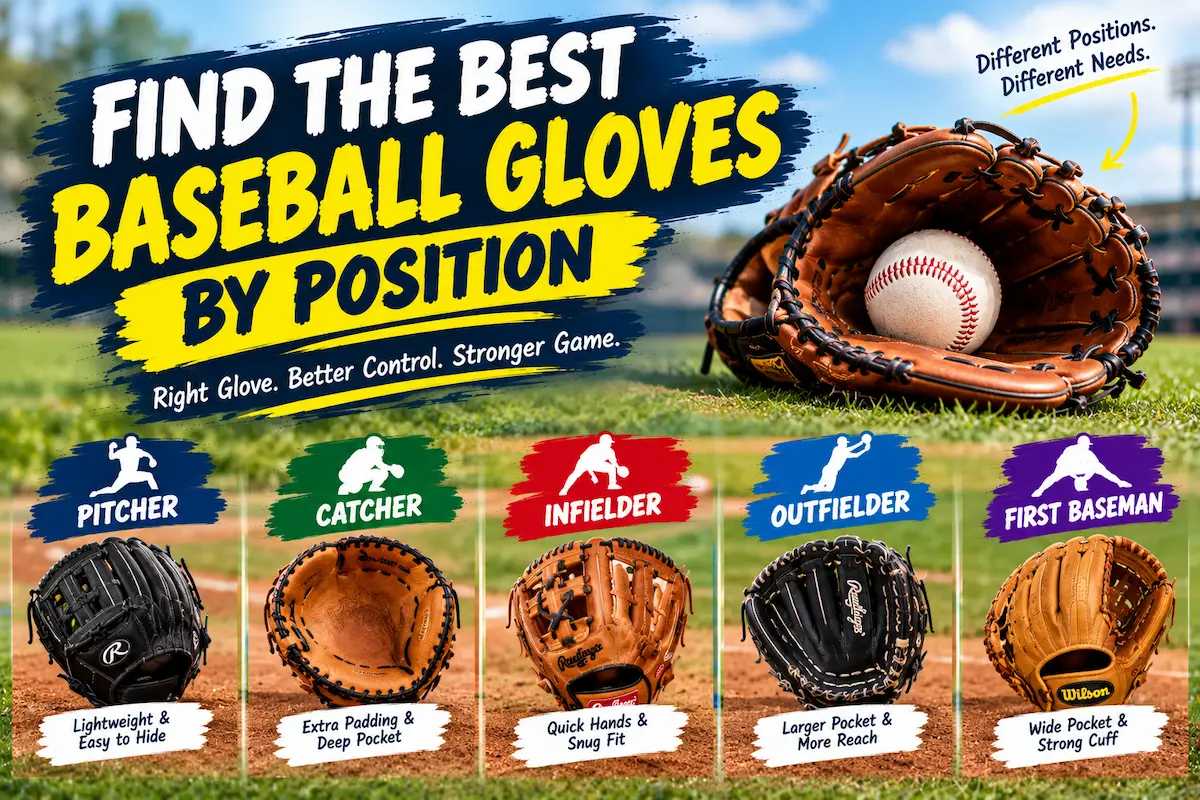
It’s critical to start with glove size. Generally speaking, shorter gloves are for infielders, and long gloves are for outfielders, with intermediate sizes for pitchers. Keeping your hand size in mind, try out different glove sizes until you find the one that fits best.
Construction & Materials
Glove construction and materials are important factors in selecting the right glove. Look for high-quality leather with reinforced palm padding and webbing for extra durability, comfort, and performance.
Glove Webbings
Different baseball gloves may come with different types of webbing, from H-webbing to single post webbing. Each has its own advantages, so research which type is best for your position and preferences.
Brand & Cost
Different brands of gloves may have different construction and materials, so research different brands and ask around for recommendations. Also, leather considers which options are within your budget.
Final Testing
Once you’ve narrowed down your selection, you should always test the glove yourself. Make sure it feels comfortable, fits your hand well, and is suited for your position.
Want to buy a Pro Glove? Let us help you without the best review of pro gloves || 44 Pro Gloves Review
Best Catcher’s Gloves
🔥 The Top 2026 Gloves by Position
Glove technology has shifted heavily toward weight reduction. In 2026, the best gloves combine ultra-premium steerhide with synthetic materials on the back of the hand. Here are the top upgrades for each position:
| Position | 2026 Top Pick | Why It Wins in 2026 |
|---|---|---|
| Middle Infield (SS, 2B) | Wilson A2K 1786 (11.5″) | The undisputed king of the shallow pocket. Perfect for lightning-fast double-play transfers. |
| Third Base (3B) | Rawlings Rev1X (11.75″) | Features a 3D-printed synthetic back. It stays incredibly stiff to handle 100 MPH line drives down the line. |
| Outfield | Marucci Capitol Series (12.75″) | Japanese Kip leather that holds its shape flawlessly over a massive H-web, securing diving catches. |
| Catcher | All-Star Pro Elite (33.5″) | The gold standard behind the dish. Unmatched pop-sound and pocket durability for framing high-velocity pitching. |
| First Base | Wilson A2000 SuperSkin 1620 | The SuperSkin back cuts the weight in half, making picking balls out of the dirt significantly faster. |
🧤 Coach Jason’s Glove Sizer
Select your age and primary position to find your perfect glove specs.
Leather, Synthetic, or Hybrid
Baseball gloves are essential for any player looking to maximize their performance on the field. The right glove material can help improve grip, protect the hand, and reduce fatigue. As such, it is important to invest in a glove made of quality materials that can stand up to the demands of the game.
Leather is the go-to material for most baseball gloves due to its durability, grip, and comfort. It is one of the most popular materials used by professional and amateur players alike. Leather gloves come in a variety of types, including cowhide, pigskin, and buffalo hide. Depending on the type of leather, the glove can be soft and supple, or more durable and stiff.
Synthetic materials such as vinyl and polyurethane are also popular choices. These materials are often lighter and more affordable than leather, but they may not be as durable or provide the same level of grip. Finally, some players opt for a hybrid material, which combines the durability of leather with the lightweight feel of synthetic material.
Synthetic materials such as nylon have become increasingly popular in recent years. Because they are more affordable than leather, they are a great option for recreational players who are looking for top performance without breaking the bank. Synthetic models often come with advanced features that add comfort and breathability. Additionally, synthetic materials are much easier to break in than leather gloves.
Hybrid gloves are becoming increasingly popular and are often used by professional players.
🏆 Coach Jason’s Final Verdict
Buying the right glove is not about picking the most expensive leather; it is about matching the specs to your exact position on the field. An outfielder using an 11.5″ I-web will drop fly balls, and a shortstop using a 12.75″ Trapeze will never turn a double play in time.
For 2026, my blanket recommendation is to find the size you need using the calculator above, and invest in a glove that incorporates weight-saving synthetics on the back of the hand (like the Rev1X or SuperSkin series). The lighter your glove, the faster your hands will be.
RELATIVE ARTICLE
10 Best Baseball Glove for Dad | Choice with Class
What Size Baseball Glove Do I Need? Based on Positions and Ages
Wilson a2K vs A2000 | Which One Is the Ideal Choice
Best Baseball Gloves Under $100 In 2026

Hello everyone. My name is Jason Butler, and I live in California, America. I was a professional AAA Minor League Baseball player. I lost my chance of playing MLB for injury issues, but I did not lose my love for baseball. I attended the coaching training program and am now working as a coach in a small school in San Diego.
I always love to share my experience and knowledge if that can help you. Play baseball, and stay fit.