In 2026, every pitcher is chasing triple-digit velocity, but the “Honest” truth is that speed alone gets timed up. Velocity is king, but efficiency is the kingdom. The sinker is the ultimate efficiency hack.
It is the only pitch in baseball designed to turn a 400-foot power hitter into a 40-foot ground ball out in a single pitch. While a four-seam fastball “rides,” the sinker “dies”—dropping out of the launch-angle path that modern hitters are trained to exploit.
If you want to throw nine innings on 90 pitches, you don’t need more strikeouts; you need weak contact. Mastering the sinker isn’t just about movement; it’s about a mindset shift from “blowing it by them” to “boring it into them.” Let’s break down the mechanics of the “Heavy Ball.”
What Is A Sinker Pitch?
Many of you may be unaware of the actual definition of the sinker. We all say sinker is a seam ball, but why?
Sinker or sinking fastball is a pitch where the pitch has a mixture of downward and horizontal movement. Normally, when you hold a sinker, the ball moves. It comes in and goes down.
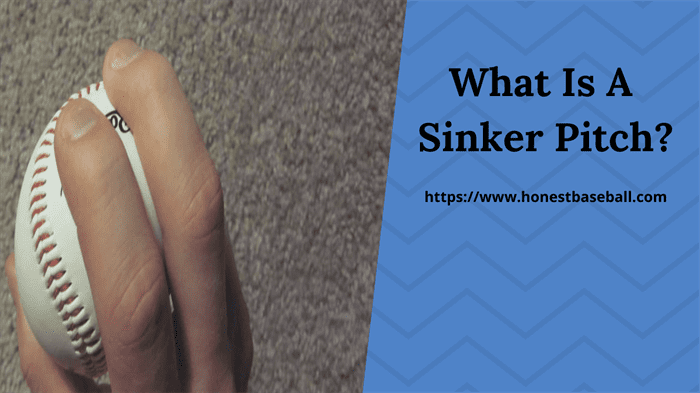
Sometimes, it is compared to four seam fastball too. It is because the throwing speed of both of them is quite the same. For sinkers, it is very easy to field ground balls and double plays.
Can you imagine there are pitchers that have tried to throw this for 20 years and they have never been able to do it! But it is not impossible. If I can do it, then I have the guts of feelings that after reading the article, you will catch up too.
While growing up, my dad always kind of taught me how to throw a baseball. It was just a straight-up too soon. Then the time passed by gradually and I was learning a lot too.
It took me a while to learn the sinker, but I eventually learned it. My coaches helped me a lot to learn it properly. One of the most crucial things that you need to remember is that you need to learn the mechanism to perform well on a sinker pitch.
Pitching Economy Calculator
The Science of "Heavy Air": Understanding Seam Shifted Wake
You’ve probably heard coaches call a good sinker a "heavy ball." But here is the Honest Truth: a baseball doesn't actually gain weight mid-flight. It feels "heavy" because of late, unexpected movement that makes it impossible for the hitter to find the barrel. In 2026, we call this phenomenon Seam Shifted Wake (SSW).
Most pitches move because of "Magnus Force"—the way the ball spins through the air. But a sinker is different. It uses the physical orientation of the seams to create an uneven wake behind the ball.
- The Science: As the ball travels, the air "sticks" to one side of the seams longer than the other. This creates a pocket of low pressure that pulls the ball down and inward (for a right-handed pitcher) at the last possible second.
- The "Cliff" Effect: Because SSW kicks in as the ball slows down near the plate, the movement is sudden. It doesn't curve; it drops.
To the hitter, the ball looks like a standard fastball in the "danger zone," but by the time they swing, the ball has shifted an extra 2–4 inches. That’s the difference between a line drive to the gap and a weak "nut-cracker" grounder to the shortstop.
The "Big Two" Sinker Grips: Choosing Your Weapon
To throw a high-level sinker in 2026, you need to understand that not all "sinking" action is the same. Depending on your finger placement, you can prioritize horizontal "run" or vertical "drop." Here are the two grips I teach every aspiring sinker-baller.
1. The Standard Two-Seam (Maximum "Run")
This is the classic sinker grip. You place your index and middle fingers directly along the two narrow seams of the ball.
- The Result: This grip maximizes side-to-side movement. It "bores" into the hands of a same-handed hitter, making it incredibly uncomfortable to swing at.
- Best For: Pitchers who want to jam hitters and force "inside" weak contact.
2. The "One-Seam" Sinker (Maximum "Drop")
This is the "Pro" secret for that elusive "cliff" drop. Instead of using two seams, you place both fingers tightly together on a single red seam.
- The Result: By concentrating the friction on one seam, you enhance the Seam Shifted Wake effect. The ball stays on a fastball plane longer before "falling off a table" at the last second.
- Best For: Inducing the classic swing-and-miss or the topped ground ball that barely reaches the pitcher's mound.
Power Pronation: The "Thumb-Down" Secret to Late Bite
The biggest mistake I see—and the one that leads to most elbow issues—is "pushing" the sinker. Most pitchers think they need to force the ball down toward the plate to make it sink. In reality, "pushing" creates a flat, "hittable" pitch and puts a dangerous strain on your Ulnar Collateral Ligament (UCL).
In 2026, we teach Power Pronation. Instead of trying to force the ball, you let your natural arm speed and a specific hand finish do the work.
The "Thumb-Down" Finish
To get that nasty, late "bite" on your sinker, you need to focus on your hand's position immediately after the ball leaves your fingers.
- The Action: As the ball leaves your index and middle fingers, your hand should naturally rotate (pronate) inward.
- The Cue: Think about pointing your thumb to the ground as you finish your follow-through.
- The Science: This pronated finish allows your index finger to stay on top of the ball longer, amplifying that Seam Shifted Wake effect that causes the ball to "die" at the plate.
Coach Butler’s "Honest" Insight: "If your palm is facing up or flat after you throw a sinker, you’re doing it wrong. Your palm should be facing away from you. That rotation isn't just for movement; it’s a safety valve for your elbow. It’s the difference between a ground out and a trip to the doctor."
Myths About Sinker Pitch
I don't know whether you have heard these myths or not, but I have heard some. And I think these myths are not necessary at all. In my opinion, pitching sinker can be hard but without flexibility, it is harder.
So, when I heard about these myths, I was a bit confused. I also tried to do the same as the myth said, but that was a foolish act.
Myth 1 - Sinker Grip Is Very Essential
Is it true that sinker grip is very important while pitching? Most pitchers have asked me the same question. Well, of course not. You will only be giving pressure on yourself.
Do not think about the finger pressure, it will just hold you down.
Now, it is not like grip is not totally important, there are sometimes sinker grip can help you a lot too. Like when you want to spin the ball slightly outward, you need to learn the gripping mechanism.
But you do not have to worry, because most of the awesome spinning sinker grips have been shown by different historical players before. So, no need to worry about that.
Myth 2 - Sinker Pitch Is Different Than A Two Seam Fastball
If you throw a fastball pitch that needs arm slot lateral movement is known as a two seam fastball. Can you relate to the sinker pitch with it?
I have previously mentioned that a sinker is when a fastball pitch sinks. It is more like a ground ball. If not, then the throw is a regular two seam fastball.
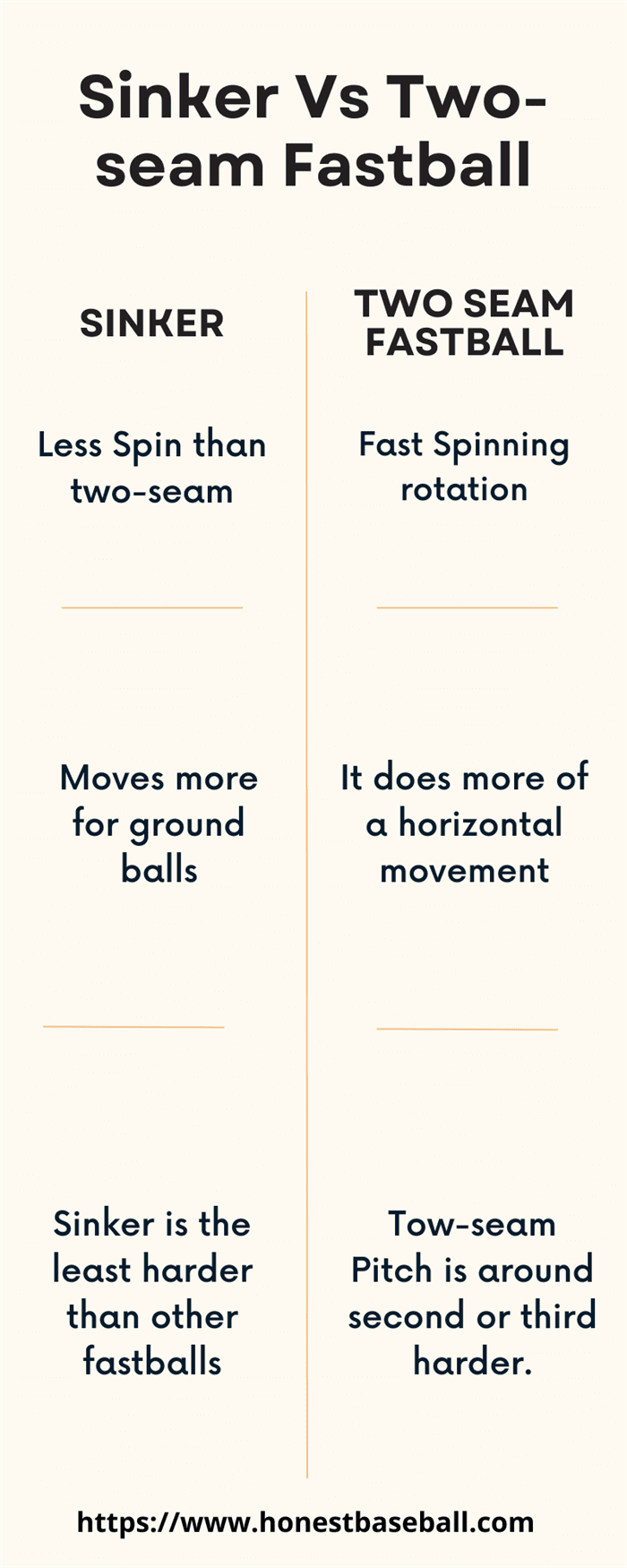
One thing that you need to keep in mind is that there is no distinction between these two pitches. Everyone wants to throw a two-seam fastball while sinking fastball.
Why Does A Ball Sink?
Did this question ever pass through your mind why a baseball sink? Normally when you do a four seam fastball pitch, all you do is throw a pitch with all the pressure through the center of your baseball.
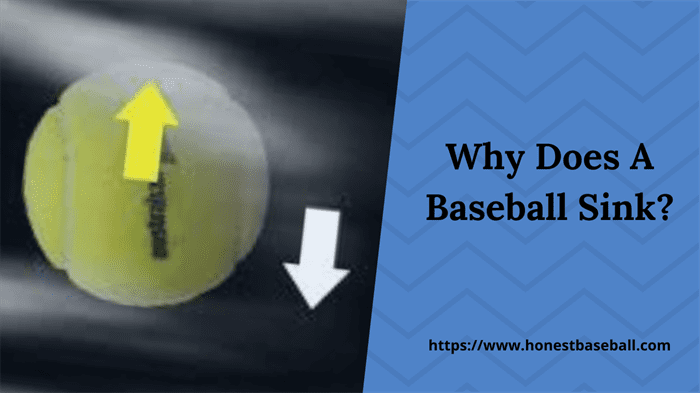
Now, to throw a sinker, you need to provide some finger pressure. At that time, I normally put pressure on the inside edge. What happens is while the ball leaves the grip and gradually the fingertips, the spin is lower than two seam fastballs.
Do you know what is the hardest position in baseball? Yes, the pitcher's position. That is why You will see all the big league pitchers spend quite a lot of time perfecting a sinker pitch.
So, the theory behind sinking is the lower the spin is, the ball will sink.
Low Spin = More Sink
As I was telling about four seam fastball before, the more the spin axis occurs, the gravity becomes lower for that ball. That means more fly balls and swinging strikes. Because the hitter can not predict the ball properly.
On the other hand, with a sinker, the striker will guess higher than the pitch. That will make him hit at the top half of the baseball. Also, because of the lower spinning rate, it does not resist gravity. So, it will fall to the ground fast.
Gripping Practices You Should Do For Sinker Pitch
I have already mentioned before a sinker pitch is a version of a fastball. Now, many of you have asked me what gripping practices to do to learn sinker grip easily.
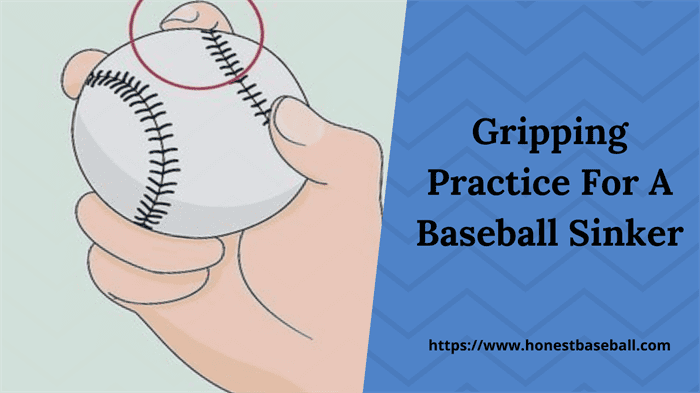
So, no need to wait more, look down below and learn more about sinker grip.
- The first thing that I like to grip the sinker is I take my index finger and hook it on the skinny horseshoe and grab on the lace over there.
- The next thing is the middle finger. What I do is, keep my middle finger quite close to my index finger. It is like the middle and index fingers are close together.
- I do not keep that much space in my hand after I grip the ball with my index finger and my middle finger. Also, the thumb positioned underneath the middle and index fingers is very important to understand.
The pitching thumb position will be straight underneath the pointer finger. If your thumb is not below the pointer, then the sinker grip will not be as effective as you are looking for.
Learn How To Throw A Sinker Pitch Perfectly
I have learned different ways to make sinker pitches in my career. And usually, they were a response to me, changing my arm slot or changing something in my delivery and pitching a little bit differently.
Also trying to figure out how I could get outs in a new way. So, I threw sinkers many times. Sometimes it was very good, and sometimes it was so so.
When I was a high school kid, I threw really high over the top and I had a hammer-like Barry Zito curveball. That was how I got into college. As I got into college, I could not throw enough strikes that way, and so my lower arm slots got slowly lower.
As it went lower, it opened the door for me to be able to sink a ball and to sink a change a lot better.
So, if you are getting any problems regarding learning how to throw a sinker in baseball properly, I am here to guide you.
You can check out how nasty Barry Zito's curveball throwing technique is over here-
Tip - 1 | Tinkering Of Your Arm Action
Not always gripping is the most important thing when you throw a sinker. But to produce ground balls, you need to select a grip by a lot of trials and errors.

By practicing a lot, I think you will get which one seam grip that you want as your sinker. Else, you can go for a regular fastball.
It is going to take tinkering, arm action. But I do not necessarily advocate that you should change your arm slots as a pitcher. You should find the slot that makes you the best version that you can be.
Tip - 2 | Finding The Grip
In the upper section, you have learned how the spin works right? But you need to understand the fact that to give an angular spin to the ball, you need to make your fingers go inside of the ball a bit.

Let the grip do the work. You need to constantly do some practice to find the perfect grip for you. Then you can spin it from your subconscious mind too.
Tip - 3| Throwing The Ball
While throwing the ball, you need to accelerate your arm motion to the maximum. Almost all the big league pitchers know this throwing technique.
Do you know the meaning of babying the pitch? It means you will throw the ball with less velocity and spin axis while throwing a filthy sinker.
Also, keep in mind that you need to put your middle finger very close to your index finger. Keep your arms side lateral movement to a minimum too.
Tip - 4| Feel the Throw Practice It more!
After throwing the sinker, think about how the techniques helped you and how to improve more. To create the true sinking fastball, you need to practice a lot.
The more you practice, the more your body movements will be better. It will develop your sensibility to throw a true sinking fastball. Also, I need to mention that I always had a good catching partner who helped me a lot to learn how to throw a sinker.
Know To Keep The Batter Unaware Of Your Sinker Pitch
You can throw a sinkerball normally, but what if the batter can anticipate it?
That's why I always advise my students to do some precautionary steps so that the batter can not understand what is coming for him. I always think that getting strikes and strikeouts are more important than ground balls in a sinker.
Here are some of the possible ways that you can utilize your batter's uncertainty a lot-
- Stop Worrying About Perfect Pitches: Do not put a lot of pressure to make a perfect pitch while you are making a sinker. If you are trying to produce ground balls every time, then the batter will surely get the hint.
- Switching Pitcher's hand: Just pitching the same throw is too predictable. If you are throwing a sinker right now, then change it the next time.
Don't let the batter predict which pitch you are throwing at him. It may lead him to create fly balls. - Opponent Is Down: Do not throw over the plate when your opponent is down in the count. Or else, they will get any hit they can. Keep it sturdy.
- Keep Yourself Neutral: Always keep yourself neutral when you are pitching. Because the batter is always watching any move you are making. It will help him to anticipate your move.
Sometimes you can throw different types of pitches too. Do you know how to throw a slider? You can try it out to break your batter's stance easily.
Some Great Tips For Perfecting Sinker Pitch From Professionals
You may have read the above section and learned how to throw a sinker pitch, but can you throw it perfectly?
That is why I am giving you some tips that I got from professionals when I was a learner. And trust me, this works so well.
Here are some great tips for perfecting sinker pitch easily-
- Practice: The first and the foremost rule of perfecting sinker pitching is by practicing a lot. Even the big league pitchers spend a long time practicing sinker throwing.
I have seen many people at the beginning saying a lot of things about how professional they are at sinker throws, but eventually, those are some regular throws. They can not even make the horizontal movement properly.
So, I will suggest that you should practice a lot to perfect the sinker properly. Create a baseball practice plan that will help you to learn the throw easily. - Focus: The major part of throwing a sinker depends on how much confident you are. And the confidence comes from focus. If you are not focused enough, then you can not produce a perfect sinker.
The slightest mistake can not make a proper ground ball. So, keep your upper body relaxed while throwing a sinker and focus too. - Save Your Pitches: I used to make this mistake a lot when throwing a sinker. I threw the ball outside the strike zone when my team was ahead. It changed some of my winning matches to losing drastically.
So, keep your focus and throw the ball as powerful as you can.
The Sinker IQ Check: Are You a Specialist?
Did you get a ground ball in the first three pitches of the at-bat?
Q Answer: Yes. If you’re constantly hitting 3-2 counts, you aren’t using the sinker correctly. It is a "pitch-to-contact" weapon designed to end at-bats early.
Is the hitter fouling the ball off straight back, or hitting it into the dirt?
Q Answer: If they are fouling it straight back, your sinker is "flat." You likely missed your Power Pronation finish.
Are you throwing the sinker to a hitter with a "flat" swing or a "steep" swing?
Q Answer: Throw it to the flat hitters. A sinker actually drops into the path of a hitter with a "steep" (uppercut) launch angle. Use your high-fastball for the "steep" swingers and the sinker for the "flat" ones.
Frequently Asked Questions
1. Can Sinker Be Called A Fast Pitch?
Yes, a sinker can be called a fastpitch. If I say precisely, it is a kind of fastball and I call it a "sinking fastball". Sinker fastball is quite similar to a two-seam fastball and a four-seam fastball.
They are almost alike, just the difference is the spinning term. Else than that, you can say sinker is a fastpitch.
2. Is Winding Up Or Stretching Better For Throwing A Sinker Pitch Perfectly?
In my opinion, pitching in the stretch more often is better than anything else. You have to throw the most important pitches over there.
If you love to be in the windup, then you do practice a lot of pitches in the windup. But there is not that much significant difference between these two terms.
3. Does A Sinker Hurt Your Arm slot?
I will say this is no worse than any other pitching technique. Any type of fastball can hurt your arm. It is because when you are throwing fastballs, you are putting a lot of stress on your nerves.
So, any high fastball pitch can make your arm numb. But I will recommend do not throw too many sinkers.
Final Words
Did you get the idea of how to throw a sinker in baseball? I guess you have probably understood how to do it perfectly by now. The most important thing that you always have to keep in mind is practice.
The more you practice, the more you will learn about the sinker pitch more. So, do not waste any more time, keep practicing starting from right now.
Hello everyone. My name is Jason Butler, and I live in California, America. I was a professional AAA Minor League Baseball player. I lost my chance of playing MLB for injury issues, but I did not lose my love for baseball. I attended the coaching training program and am now working as a coach in a small school in San Diego.
I always love to share my experience and knowledge if that can help you. Play baseball, and stay fit.